
There comes a point every year in certain parts of the country when riding becomes genuinely difficult or genuinely unpleasant. In the higher reaches of Himachal Pradesh and Uttarakhand, the first heavy snowfall makes the mountain roads impassable and the riding season ends with the kind of clear, absolute finality that lower-altitude riders rarely experience. In the plains, the deepest winter months bring a combination of dense fog, extremely cold temperatures, and road conditions that make daily riding a genuine challenge rather than a pleasure. And even in the south, where winters are mild by comparison, there are riders who choose to take a deliberate break from riding for a period and to use that time to prepare their motorcycle properly for the months ahead.
Whatever brings you to the decision to store your motorcycle for an extended period, how you put it away matters enormously. A motorcycle that is stored incorrectly for two or three months can develop problems that cost significant money and effort to resolve before it will run properly again. A motorcycle that is stored correctly will come back to life in the spring with the same readiness and reliability it had when you parked it in the autumn, asking only to be started and ridden rather than requiring diagnosis and repair before it will do either.
This guide is going to walk through every step of proper winter motorcycle storage in practical, honest detail. Not a quick checklist but a proper understanding of what each step does and why it matters, so that you can approach the process with the knowledge to do it thoroughly rather than rushing through it and hoping for the best.
Why Proper Storage Preparation Matters
Before we get into the steps, it is worth spending a moment on why preparation matters at all. Many riders store their motorcycles by simply riding them into the garage, turning the key off, and walking away. If they are lucky, the bike starts again when they return to it weeks or months later. If they are less lucky, they find a flat battery, a fuel system problem, a corrosion issue that was not present when they parked, or worse.
The problems that develop in stored motorcycles are mostly predictable and mostly preventable. Fuel left in a carburettor or fuel system without proper treatment degrades and forms varnish deposits that block jets and passages. A battery that is left without maintenance slowly self-discharges to the point where it can no longer be recharged and needs replacement. Tyres that sit stationary under load develop flat spots from sustained contact with the floor. Moisture that gets into engine oil, brake fluid, and metal surfaces creates corrosion that develops slowly but consistently through the storage period. Chain corrosion develops quickly on an unlubricated chain in a cold, potentially damp environment.
None of these problems happen because motorcycles are poorly made. They happen because motorcycles are designed to be ridden regularly and the systems within them depend on regular operation to maintain themselves. Oil circulates through the engine on every start, coating surfaces and preventing corrosion. Fuel moves through the system on every ride, preventing the stagnation that leads to deposits. The battery recharges from the alternator on every ride, maintaining its state of charge. When you stop riding for an extended period you need to actively substitute for these natural maintenance mechanisms or accept the consequences of not doing so.
Doing the preparation properly takes a few hours and costs a modest amount in materials. The alternative, dealing with the problems that improper storage creates, typically takes longer and costs more. The preparation is clearly the better investment.
Step One: The Final Ride and Initial Assessment
The last ride before storage is a good opportunity to make a proper assessment of the motorcycle’s current condition and to identify anything that needs attention before it goes into storage. Problems that are manageable now become worse during storage and more expensive to fix afterwards. A small oil leak that you have been monitoring becomes a drained sump if the motorcycle sits for two months with the engine running dry. A chain that is getting thin becomes a chain that has stretched beyond usable limits by the time you want to ride again.
During the final ride or immediately after it, while the engine is warm and everything is accessible, check the following. Look for any evidence of oil leaks from gaskets, seals, and drain plugs. Check the coolant level in the reservoir if the motorcycle is liquid-cooled. Check the brake fluid level in both reservoirs and assess the colour of the fluid. Dark or brown brake fluid has absorbed significant moisture and should be replaced before storage rather than after. Assess the tyre condition including tread depth and any cracking or damage to the sidewalls. Check the chain tension and condition. Look at the overall condition of the motorcycle and note anything that needs attention.
This assessment step sounds obvious but it is consistently skipped by riders who are more focused on getting the bike parked than on understanding what state it is in when they do so. The five minutes spent doing this properly saves frustration and expense months later.
Step Two: Fuel System Preparation
The fuel system is one of the most common sources of problems in improperly stored motorcycles and the preparation required differs slightly depending on whether your motorcycle is carburetted or fuel injected.
For fuel-injected motorcycles the process is simpler. Add a fuel stabiliser to the tank according to the product’s instructions, ensuring that the tank is as full as possible to minimise the air space above the fuel that allows moisture condensation. Run the engine for ten to fifteen minutes after adding the stabiliser to ensure that the treated fuel has circulated through the entire fuel system including the injectors and the fuel lines. Fuel stabiliser products work by slowing the oxidation and degradation process that fresh fuel undergoes over time, maintaining the fuel in usable condition for periods of several months. Without stabiliser, modern petrol begins to degrade noticeably within thirty to sixty days and can leave deposits in the fuel system that affect starting and running quality when you return to the motorcycle.
For carburetted motorcycles the process requires an additional step. After adding fuel stabiliser and running the engine to circulate it, you should drain the carburettor float bowl entirely. The float bowl holds the small reservoir of fuel that the carburettor keeps ready for immediate delivery to the engine. This small amount of fuel is the most likely to sit static for the entire storage period without the circulation that stabiliser provides to the main tank fuel, and it is this fuel that most commonly turns to varnish and blocks the carburettor jets. Draining the float bowl through the drain screw at the bottom of the carburettor leaves the carburettor dry and eliminates this risk completely. The carburettor will refill automatically from the tank when you start the motorcycle again in the spring.
A full tank is better than a low tank for storage from a corrosion perspective because the empty space above fuel in a partly filled tank allows moisture in the air to condense on the metal walls of the tank and begin the rust process. A tank that is full of properly stabilised fuel has minimal air space and minimal condensation risk. This is particularly important for steel tanks and less critical for the plastic or fibreglass tanks found on many modern motorcycles.
Step Three: Engine Oil and Filter
Changing the engine oil and filter before storage rather than after is a recommendation that many riders find counterintuitive. The logic for changing before storage rather than at the first service after storage is straightforward. Engine oil that has been used accumulates combustion byproducts including acids that are formed from the combustion process and moisture that enters through the crankcase ventilation system. These acids in used engine oil cause slow but real corrosion of the metal surfaces they are in contact with during storage. Fresh oil contains the full complement of anti-corrosion additives and provides significantly better protection for engine internals during the storage period.
After changing the oil, run the engine briefly to circulate the fresh oil through all the internal passages and to coat all the surfaces it is designed to protect. Then let the engine cool completely before proceeding to the next storage steps. The combination of a full tank of stabilised fuel and fresh engine oil means that the two most important fluid-filled systems in the motorcycle are in the best possible condition for the storage period ahead.
Check the coolant condition and concentration in liquid-cooled motorcycles. Coolant that has been in service for several years loses its anti-corrosion properties even if the antifreeze protection remains adequate. Storage is a good time to assess and replace coolant that is due for a change. In cold storage environments, confirming that the coolant concentration is adequate for the minimum temperatures expected in the storage location is practical insurance.
Step Four: Battery Maintenance
Battery failure during storage is one of the most common and most frustrating problems that riders encounter when they return to stored motorcycles. A standard lead-acid battery that is left in a discharged or partially discharged state will sulphate, which means that the lead sulphate crystals that form during discharge do not fully reconvert during recharging and the battery’s capacity is permanently reduced. A battery that sulphates enough during storage may never again hold a sufficient charge to start the motorcycle reliably, requiring replacement before the riding season begins.
The correct approach to battery storage depends on the type of battery and the storage duration. For short storage periods of one to two months, fully charging the battery before storage and storing the motorcycle in a location that is not extremely cold is generally adequate. For longer storage periods, connecting the battery to a maintenance charger that keeps it at full charge without overcharging it is the best solution. Maintenance chargers, often called trickle chargers or smart chargers, supply a small charging current that compensates for the battery’s natural self-discharge rate without supplying so much current that it damages the battery. They are inexpensive, available widely, and completely automatic in operation once connected and plugged in.
Removing the battery from the motorcycle and storing it indoors on a maintenance charger is the most thorough approach, particularly if the storage space is cold and damp. A battery stores better in a cool but not freezing environment and the controlled conditions of indoor storage provide this more reliably than a cold garage or outbuilding. Mark the battery terminals clearly before removal to ensure correct reconnection and keep the positive and negative terminals covered or separated during storage to prevent accidental short circuits.
Modern lithium batteries, which are fitted to some performance motorcycles, have different storage requirements from lead-acid batteries and must not be maintained on chargers designed for lead-acid batteries. A lithium battery should be charged to approximately fifty to seventy percent of its capacity for storage rather than one hundred percent, as storage at full charge accelerates the degradation of lithium battery chemistry. Use only chargers specifically rated for lithium motorcycle batteries to maintain them during storage.
Step Five: Tyre Care and Prevention of Flat Spots
Tyres that sit under load for extended periods in contact with the same section of their circumference can develop flat spots where the tread and carcass have been compressed in one position for too long. On cold tyres the rubber is less flexible and the flat spot potential is greater. A mild flat spot may resolve itself after a few kilometres of riding as the tyre warms up and the rubber returns to its normal shape. A severe flat spot may persist and cause an uncomfortable vibration that requires tyre replacement to resolve.
The most effective prevention is to move the motorcycle forward or backward slightly every few weeks to rotate the tyres to a new contact position. This requires a few seconds of effort and completely eliminates the flat spot risk. If the motorcycle cannot be moved regularly, placing it on paddock stands that lift both wheels clear of the ground removes the contact entirely and is the most thorough solution for long-term storage.
Inflate the tyres to a slightly higher pressure than the normal riding pressure before storage, perhaps ten percent above the recommended riding pressure. This compensates for the slow natural air loss that occurs over months and prevents the tyres from dropping significantly below the minimum safe pressure during the storage period. Check tyre pressure before the first spring ride and adjust to normal riding pressure before setting off.
Inspect the tyres carefully for any cracking in the sidewalls, for bulges, for cuts that may have allowed moisture into the carcass, and for tread depth that may have reached or approached the wear indicators. A tyre that is borderline at the end of the riding season will not improve during storage and should be replaced before the next season begins rather than creating a safety concern on the first spring ride.
Step Six: Cleaning and Corrosion Protection
Cleaning the motorcycle thoroughly before storage removes the road grime, salt deposits, insect residue, and brake dust that would otherwise have several months to work on the surfaces they are in contact with. Salt is particularly damaging to metal surfaces and to painted finishes and any salt deposits from riding on salted roads in early winter should be removed completely before storage.
Wash the motorcycle thoroughly using motorcycle-specific cleaning products rather than harsh household detergents that can strip protective waxes and coatings. Pay particular attention to the undersides of mudguards, the area around the swing arm pivot, the brake caliper areas where brake dust accumulates, and any crevices where road debris gathers. Allow the motorcycle to dry completely, preferably by riding it briefly after washing to use engine and exhaust heat to evaporate moisture from difficult-to-reach areas.
Once clean and dry, apply a corrosion protection product to all unpainted metal surfaces. Dedicated products for motorcycle chrome and bare metal protection are available and create a barrier film that prevents moisture from reaching the metal surface during storage. Pay attention to the exhaust system, which is particularly vulnerable to surface rust during storage, to the brake disc surfaces, to exposed bolts and fasteners, and to the chain if it has been cleaned and is ready for lubrication.
Lubricate the chain thoroughly with a good quality motorcycle chain lubricant after cleaning it. A properly lubricated chain going into storage is protected against the corrosion that develops rapidly on dry metal chain components in cold, potentially damp conditions. A chain that has been neglected over a storage period can develop surface rust that damages the chain’s rollers and increases wear rates significantly when riding resumes.
Apply a coat of motorcycle wax or paint sealant to painted surfaces. This protects the paint from moisture and from any minor surface contamination that occurs during storage and leaves the motorcycle looking fresh rather than dull when you bring it out in the spring. Use a penetrating lubricant such as WD40 or equivalent on all control pivot points including the throttle, clutch, and brake levers at the handlebar, the brake and clutch lever pivot bolts, and the side and centre stand pivots.
Step Seven: The Storage Environment
Where you store the motorcycle matters almost as much as the preparation steps you have taken. An ideal motorcycle storage environment is dry, reasonably well-ventilated, cool but not freezing, and secure. Most garages provide the core requirements but some are better than others for motorcycle storage and it is worth thinking about the specifics.
Damp garages are the most problematic storage environment because moisture in the air will find its way onto every metal surface of the motorcycle regardless of the corrosion protection products you have applied. If your garage has a moisture problem, addressing it with a dehumidifier during the storage period makes a significant difference to the condition of everything you store in it, not only the motorcycle.
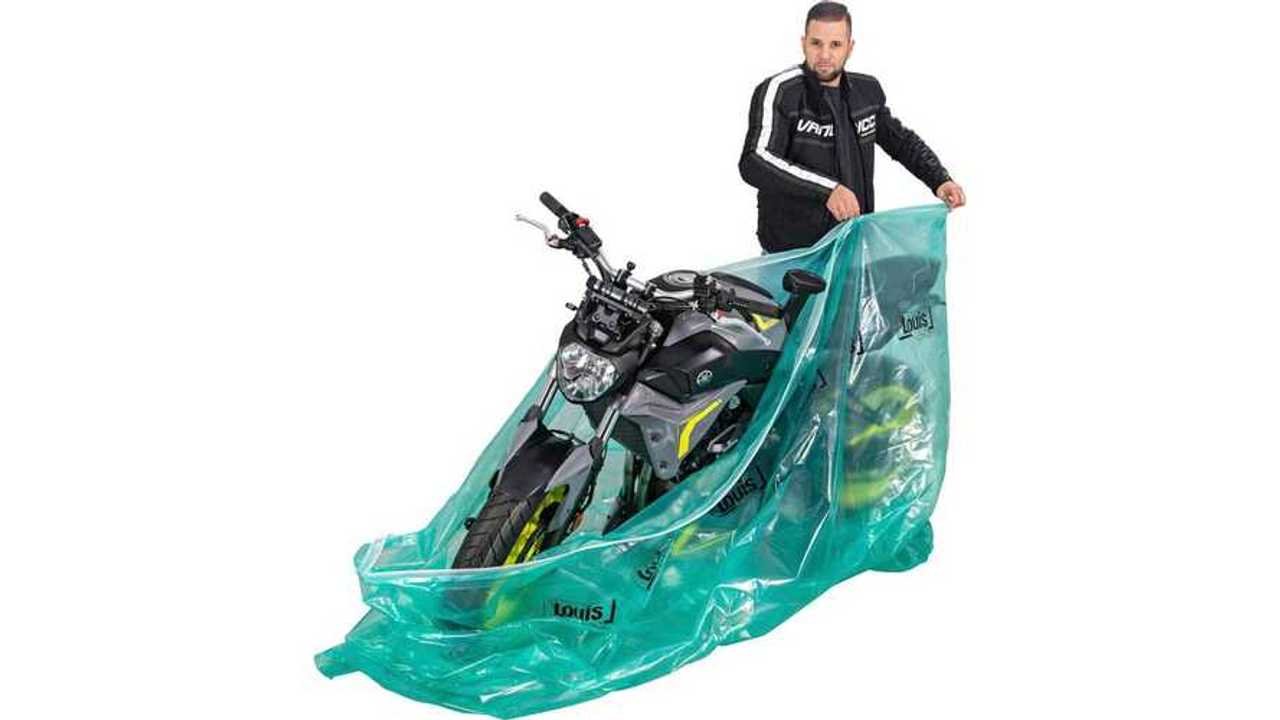
A motorcycle cover appropriate to the storage environment helps significantly. An outdoor cover designed to keep moisture and dust off a motorcycle while allowing moisture that does accumulate to escape rather than being trapped against the motorcycle surface is the right product for garage storage. Plastic sheeting or non-breathable covers trap moisture against the motorcycle’s surfaces and can create a worse environment than no cover at all by holding the moisture in contact with the metal and accelerating the corrosion they were intended to prevent.
Placing the motorcycle on a mat or piece of cardboard under the tyres insulates the tyres from direct contact with a cold concrete floor, which is beneficial both for the tyre rubber and for preventing the slow seepage of moisture through the concrete from reaching the motorcycle’s lower surfaces.
Security in storage is worth considering particularly in shared storage areas. Fitting a disc lock to the front brake disc and using a heavy-duty chain lock through the frame and rear wheel to a fixed anchor point are precautions that maintain security through the storage period.
Step Eight: Spring Preparation Before the First Ride
The preparation for returning the motorcycle to service in the spring is almost as important as the preparation for storage and is frequently rushed or skipped in the enthusiasm of getting back on the bike after a long break.
Reinstall the battery if it was removed, connecting positive before negative and checking that all connections are clean and tight. Check the battery’s state of charge and charge it fully if it has dropped despite maintenance charging. Check all fluid levels including engine oil, coolant, and brake fluid before starting the engine.
Start the engine and allow it to reach operating temperature. Listen for any unusual noises and watch for any new leaks that were not present at the end of the previous season. Let the engine idle for several minutes to circulate fresh oil through all internal passages and to bring all temperatures to normal operating levels before adding load or revving the engine.
Check tyre pressures and adjust to normal riding pressures. Inspect the tyres again in daylight after the storage period for any damage or cracking that may not have been visible at the time of storage preparation. A short slow-speed test in a safe area before a proper ride allows the brakes to be assessed and confirms that everything is working correctly.
Conclusion
Winter motorcycle storage done properly is not a complicated process but it is one that requires deliberate attention to each step and an understanding of why each step matters. The fuel system preparation that prevents varnish deposits from forming. The fresh engine oil that protects internal surfaces from acid corrosion. The battery maintenance that ensures it comes back with full capacity. The tyre care that prevents flat spots and maintains pressure. The cleaning and corrosion protection that keeps the motorcycle looking and functioning as it should. The attention to the storage environment that prevents moisture from undoing everything else.
Each of these steps builds on the others to create a storage preparation that leaves the motorcycle in the best possible condition throughout the winter months and ensures that the first spring morning you choose to ride, the bike is ready without drama, without unexpected problems, and without the expense and frustration of fixing damage that proper preparation would have prevented.
The investment of a few hours and a modest amount in materials is genuinely good value compared to the alternative. A battery replacement costs more than a season’s worth of maintenance charging. Carburettor cleaning for varnish deposits caused by unstabilised fuel costs more than a bottle of stabiliser. Dealing with corrosion damage that developed during an unprotected storage period costs more than the cleaning and protection products that would have prevented it.
But beyond the practical economics, there is something satisfying about doing this properly. Knowing that the motorcycle is properly looked after, that the preparation was thorough, and that when the cold months pass and the good riding days return, the machine will be ready without complaint is a good feeling for any rider who cares about their motorcycle.
Take the time to do the storage preparation properly. Your motorcycle will repay that care with reliability and readiness when you need it. And when spring arrives and you want nothing more than to get back on the road, the last thing you want to be doing is diagnosing storage problems rather than riding.
Put it away properly. Bring it back ready. And make the most of every riding day the season gives you.