
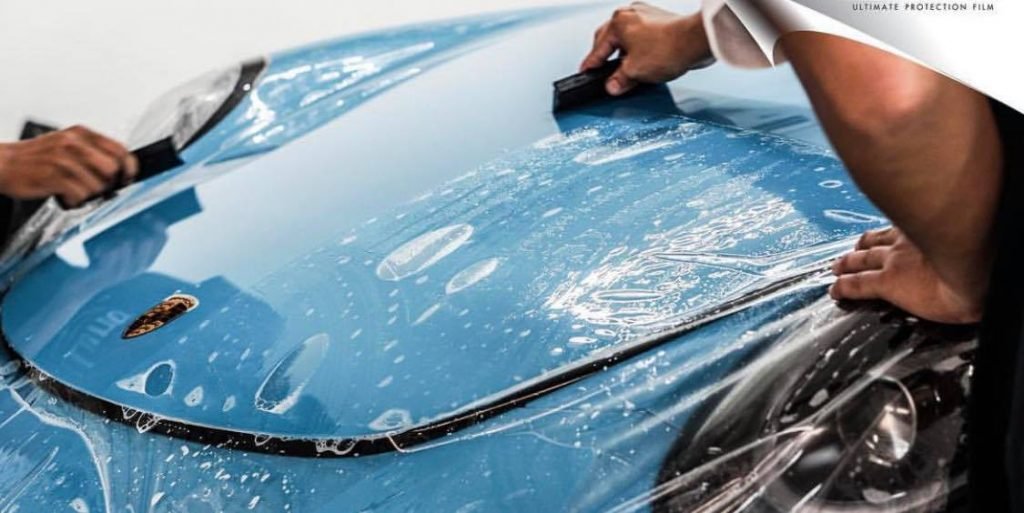
There is a specific feeling of pride that comes with walking away from your car, turning around, and looking back at it one last time. If the paint is gleaming in the sunlight, looking deep and wet like a pool of water, it just makes you feel good. It signals that you take care of your things. But paint protection is about much more than just vanity or making your neighbors jealous. Your car’s paint is the only barrier between the metal bodywork and the harsh world outside. It is constantly under attack. The sun beats down with UV rays that try to fade the color. Birds leave acidic droppings that can etch permanent holes in the clear coat. Road salt, tar, and industrial fallout all work together to eat away at that beautiful finish.
Most people think that washing their car is enough. They run it through an automatic car wash once a month and call it a day. But washing only removes the dirt that is sitting on top. It does nothing to stop the damage that happens chemically or physically. To truly protect your investment, you need a sacrificial layer. You need something that takes the beating so your paint doesn’t have to. This is where waxing, sealing, and coating come in. It can seem confusing at first because there are so many products on the shelf with fancy names. But the concept is actually very simple. In this guide, we are going to break down the world of paint protection. We will look at the old-school waxes, the modern sealants, and the high-tech ceramic coatings. We will explain how to prep your paint, how to apply these products, and how to maintain that showroom shine for years, all in simple, plain English.
Why Your Car Paint Needs Armor Against the Elements
To understand why you need wax, you have to understand what modern car paint actually is. In the old days, cars had “single stage” paint, which was just a thick layer of color. Today, almost all cars have a “base coat” (the color) and a “clear coat” on top. The clear coat is a layer of transparent paint that gives the car its shine and protects the color.
The problem is that this clear coat is incredibly thin. It is thinner than a Post-It note. And it is porous. If you look at it under a microscope, it looks like a sponge with millions of tiny holes. When dirt, water, and bird droppings land on your car, they get stuck in these pores. The sun heats them up, and they start to corrode the clear coat. Over time, this makes the paint look dull, chalky, and scratched. This is called oxidation.
Paint protection acts like a shield. Whether it is a wax, a sealant, or a ceramic coating, it fills in those microscopic pores. It creates a smooth, slippery surface on top of the clear coat. When it rains, the water cannot stick to the paint, so it beads up and rolls off. when a bird makes a mess, the acid sits on the wax, not the paint. The sun’s UV rays hit the protection layer first, burning it away instead of burning your clear coat. Essentially, you are applying a temporary skin to your car that you can easily replace, saving the permanent skin underneath.
Understanding Carnauba Wax The Classic Glow
When people think of detailing, they think of “waxing.” This is the traditional method, and for many enthusiasts, it is still the best. Carnauba wax comes from the leaves of a palm tree that grows in Brazil. In nature, the wax protects the leaves from the blistering sun and heavy rain. We harvest it and mix it with oils and solvents to make car wax.
The biggest advantage of natural Carnauba wax is the look. It provides a warm, deep, natural glow. It makes the paint look “wet,” especially on dark colors like black, red, or deep blue. It fills in minor scratches and swirls effectively, hiding imperfections. It is also very safe to use. You can’t really mess it up. If you leave it on too long, it might be hard to wipe off, but it won’t damage anything.
The downside of natural wax is durability. Because it is a natural product, it breaks down relatively quickly. In the heat of summer, a coat of wax might only last four to six weeks. It melts in high temperatures and washes away with strong soaps. This means you have to re-apply it often. If you enjoy the process of spending a Sunday morning rubbing your car, this is perfect. If you want “set it and forget it” protection, you might want to look at modern alternatives.
Paint Sealants The Synthetic Shield for Longevity
As chemistry advanced, detailers wanted something that lasted longer than natural wax. Enter the Paint Sealant. These are fully synthetic, man-made products. They are engineered in a lab using polymers that bond tightly to the paint surface.
While a wax sits on top of the paint like a blanket, a sealant bonds to it like glue. This makes it much more durable. A good quality sealant can last four to six months, easily surviving through a hot summer or a harsh winter. They have a higher melting point than wax and resist detergents better.
The look of a sealant is different, too. While wax is “warm” and “deep,” sealants are usually described as “glassy,” “sharp,” or “sterile.” They reflect light very brightly, making the car look like it is wrapped in plastic wrap or candy coating. This looks fantastic on metallic paints and lighter colors like silver or white, where you want that popping flake effect. Applying a sealant is usually easier than wax. Most are liquids that wipe on very easily, haze over quickly, and wipe off with almost no effort. For the average driver who wants great protection with maintenance only twice a year, sealants are the sweet spot.
Ceramic Coatings The High Tech Solution
The newest player in the game is Ceramic Coating. You might have heard people raving about this. It is often sold as a “glass coating” or “nano-coating.” This is the heavy-duty stuff. It is liquid silica (glass) suspended in a solvent. When you apply it to the paint, the solvent evaporates, and the silica cures into a hard, glass-like shell.
This shell is semi-permanent. Unlike wax or sealant which washes off, a ceramic coating can last anywhere from two to five years depending on the quality. It is incredibly hard, offering some resistance to very light swirl marks (though it won’t stop rock chips). It is also extremely hydrophobic. This is a fancy word meaning “water-fearing.” Water hates ceramic coatings. If you spray a coated car with a hose, the water jumps off the surface instantly. This makes the car “self-cleaning” to a degree because the dirt rolls off with the water.
However, ceramic coatings are expensive and harder to apply. If you mess up the application—leave a high spot or a streak—it hardens like that. You can’t just wipe it off; you have to polish it off with a machine. The preparation required is also intense. You must polish the paint to perfection before applying a coating, because the coating locks in whatever condition the paint is in. If you coat over a scratch, that scratch is sealed there for three years.
Preparation is Key Cleaning Before You Protect
This is the step that most people skip, and it is the reason their wax doesn’t last. You simply cannot wax a dirty car. If you wash your car and then immediately apply wax, you are sealing in all the contamination that the wash didn’t remove.
Run your hand over your paint after washing it. Does it feel rough, like sandpaper? That is bonded contamination—brake dust, rail dust, and tree sap. If you wax over this, the wax cannot bond to the paint. It bonds to the dirt, and when the dirt falls off next week, the wax goes with it.
You need to use a “Clay Bar.” This is a piece of sticky detailing clay. You spray a lubricant on the wet car and rub the clay bar over the paint. It pulls the contaminants out of the pores, leaving the paint as smooth as glass. You should also consider using a “paint cleaner” or a “polish.” This chemically removes old wax and oxidation. Think of it like sanding a piece of wood before painting it; you need a clean, virgin surface for the protection to stick. The better your prep, the longer your protection will last and the better it will look.
How to Apply Wax Like a Pro Without Streaks
Applying wax is therapeutic, but there is a technique to it. Many people use way, way too much product. They think a thick layer gives more protection. It does not. The paint can only absorb a microscopic layer of wax. Anything extra is just waste that makes it harder to wipe off.
Use a foam applicator pad. Put a few small drops of liquid wax or a light swipe of paste wax on the pad. Apply it to one panel at a time, like the hood. Use light pressure and overlapping circular motions (or straight lines, if you prefer) to ensure 100% coverage. You want the layer to be so thin it is almost invisible.
Wait for the wax to “haze.” It will turn from a wet liquid into a dull, white fog. You can test if it is ready with the “Finger Swipe Test.” Run your clean finger through the wax. If it smears, it is still wet—wait longer. If it wipes away clean and you see shiny paint underneath, it is ready. Take a clean, plush microfiber towel and buff it off. Flip the towel often to a clean side. Do not let the wax bake on in the hot sun, or it will turn to concrete and be a nightmare to remove. Always wax in the shade on a cool surface.
Applying Sealants and Coatings for Maximum Bond
Applying a synthetic sealant is very similar to wax, but usually easier. Because they are man-made, they are designed to be user-friendly. Most sealants are liquids. You spread them thin, let them dry (usually about 15 to 20 minutes), and wipe them off. Some modern spray sealants are even easier: you spray them on a wet car while drying it, and they cure instantly.
Ceramic coatings are different. They usually come in tiny glass bottles with a suede applicator block. You apply a few drops to the block and wipe it onto a small section (like half a door) in a cross-hatch pattern (up-down, then left-right). You will see the coating “flash” or rainbow, looking like oil on water.
This is your signal to wipe it off immediately. You cannot let a ceramic coating dry on the paint, or it will harden into ugly high spots. You wipe it off while it is still wet to level it out. You need good lighting for this to make sure you didn’t miss a spot. Once applied, you must keep the car dry for at least 24 hours to let the coating cure and harden. If it gets wet too soon, the water will disrupt the chemical bond and ruin the coating.
Maintenance Washing How to Make Protection Last
You have spent hours prepping, polishing, and protecting your car. It looks amazing. Now, how do you keep it that way? The way you wash your car determines how long your wax lasts.
The number one rule: Do not use dish soap. Dish soap is designed to strip grease off frying pans. It is very harsh. If you wash your car with dish soap, you are stripping off that wax layer you worked so hard to apply. Use a dedicated, pH-neutral car shampoo. This soap is gentle and won’t eat your wax.
Also, avoid automatic car washes with spinning brushes. Those nylon bristles are brutal. They will scratch your paint and strip your wax in one pass. Touchless car washes are better, but they use very harsh acidic soaps to clean without touching, which degrades wax quickly. The best way is to hand wash at home using the two-bucket method. Every few washes, use a “spray wax” or a “booster spray” while drying. This adds a tiny sacrificial layer on top of your main protection, topping it up and extending its life.
Busting Common Myths About Car Wax and Paint Protection
There is a lot of bad information out there about car care. Let’s clear up a few myths. First, “New cars don’t need wax.” This is false. New cars sit on dealership lots for months, exposed to the elements. The dealer might spray a cheap glaze on it for delivery day, but it washes off in a week. You should wax a new car immediately to protect that fresh clear coat.
Second, “Paste wax is better than liquid wax.” This used to be true thirty years ago, but not anymore. Modern chemistry is amazing. Liquid waxes and even spray sealants can now offer durability that rivals hard pastes. Choose the format that you enjoy using. If it is easier, you will do it more often, which is what matters.
Third, “Wax removes scratches.” No, it doesn’t. Wax fills scratches. It hides them. Imagine a crack in the sidewalk filled with water; the surface looks flat, but the crack is still there underneath. If you strip the wax off, the scratches will reappear. The only way to remove a scratch is to polish the paint down to the level of the scratch.
Conclusion The Pride of a Well Protected Ride
Paint protection is a journey, not a destination. It is a cycle of care that keeps your vehicle looking its best. Whether you choose the warm glow of a natural Carnauba wax, the glassy shine of a synthetic sealant, or the hard shell of a ceramic coating, the act of doing it is what counts.
There is a practical benefit, of course. A car with well-maintained paint has a much higher resale value. When you go to sell it, a buyer will see the shine and assume the engine and mechanicals were treated with the same care. It signals quality.
But really, it is about the feeling. It is about walking out to your car in a rainy parking lot and seeing the water beading up perfectly while the other cars look flat and wet. It is about the smoothness of the paint when you open the door. It is about preserving a machine that serves you every day. So, grab a clay bar, pick your favorite protection, and spend an afternoon giving your car some armor. It will thank you by shining bright for miles to come.