
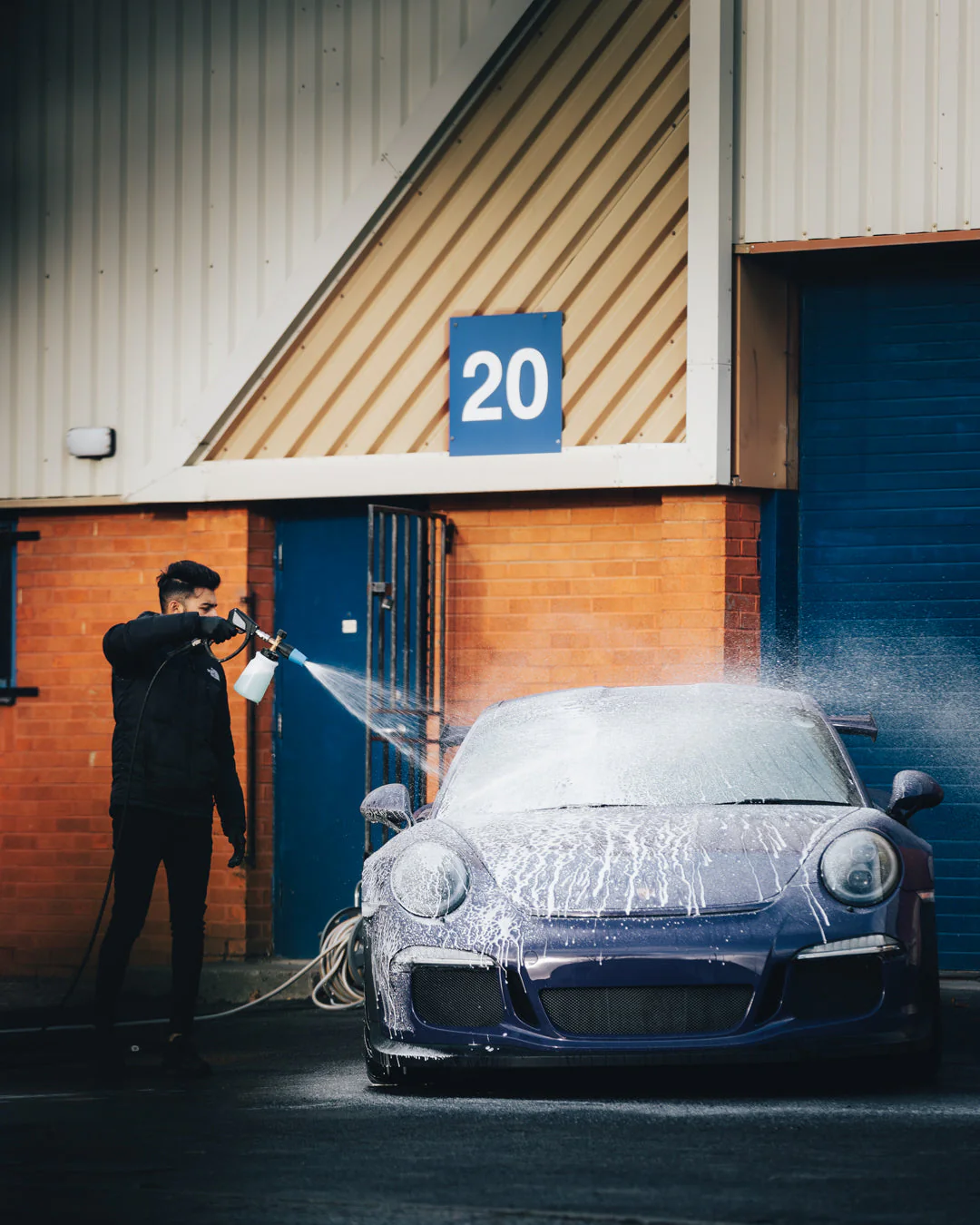
There is a very distinct feeling you get when you sit in a brand new car. The dashboard is free of dust, the seats feel firm and clean, the carpets are spotless, and the paint on the outside acts like a mirror. It feels special. It makes you want to drive carefully. It makes you proud. But fast forward three years, and that same car usually feels very different. There are empty coffee cups in the cup holder, a layer of grey dust on the dashboard, mysterious stains on the seats, and the paint is covered in swirl marks that look like spider webs in the sun. We often think that this decline is inevitable. We think that cars just get old and dirty, and the only way to get that “new car feeling” back is to buy a new car.
This is completely wrong. You do not need a new car. You just need to learn the art of auto detailing. Detailing is not the same as a quick car wash. A car wash is like taking a shower; detailing is like going to a spa for a full day of treatments. It goes deep. It cleans the places you cannot see. It restores the materials to their original condition. And the best part is that you do not need to be a professional to do it. With a few simple tools, some patience, and the right techniques, you can make a ten-year-old car look like it just rolled off the showroom floor. In this guide, we are going to walk you through the entire process of detailing your vehicle, from the wheels to the roof, inside and out. We will use simple, plain English to explain the secrets that professionals use, so you can fall in love with your car all over again.
Understanding the Difference Between Washing and Detailing
Before we pick up a bucket, we need to understand what we are actually doing. Most people wash their car on a Sunday afternoon to knock the dirt off. They spray it with a hose, scrub it with a sponge, dry it with an old towel, and call it a day. This is maintenance, but it is not detailing. Washing removes the loose dirt on the surface. Detailing removes the bonded contaminants, the scratches, the oxidation, and the deep-set grime that a hose cannot touch.
Detailing is about preservation. Paint is thin. Clear coat (the shiny top layer of paint) is easily damaged by UV rays from the sun, bird droppings, and acid rain. If you only wash the car, you are leaving these things behind to slowly eat away at the finish. Detailing involves steps like “clay barring” to pull stuck metal particles out of the paint, “polishing” to smooth out scratches, and “protecting” with wax or ceramic coatings to seal the surface. Inside, it means getting the dust out of the air vents, conditioning the leather so it doesn’t crack, and extracting the dirt from the carpets. It takes more time—a full detail can take an entire weekend—but the results are transformative. It adds value to your vehicle and protects your investment.
The Essential Tools You Need (And What to Avoid)
You cannot paint a masterpiece with a bad brush, and you cannot detail a car with a dirty rag. The tools you use are just as important as the chemicals. The number one rule of detailing is to throw away your old sponges. Sponges are flat. When they pick up dirt, the dirt sits on the surface of the sponge. When you rub that sponge across the paint, you are essentially dragging sharp rocks across your car, creating scratches.
Instead, you need “Microfiber.” Microfiber is a special synthetic fabric made of millions of tiny loops. These loops lift the dirt away from the surface and trap it deep inside the towel, away from your paint. You should have a big pile of microfiber towels. Use different colors for different jobs: yellow for the interior, blue for the glass, and grey for the paint, so you never accidentally wipe your dashboard with a greasy wheel towel.
You also need two buckets. Yes, two. We will explain why in the next section. You need a “Wash Mitt” made of microfiber or wool. You need a variety of brushes—stiff brushes for the tires, soft brushes for the wheels, and tiny makeup-style brushes for the interior vents. For chemicals, you don’t need the most expensive brand on the shelf. You need a good car soap (shampoo), a wheel cleaner, an all-purpose cleaner (APC) for the interior, a glass cleaner, and a spray wax or sealant. Avoid dish soap at all costs. Dish soap is designed to strip grease off frying pans; if you use it on your car, it strips away the protective wax and dries out the rubber seals. Stick to products made for cars.
Starting with the Wheels and Tires The Grimiest Job First
Many people start washing their car at the roof and work down. This makes sense for the paint, but you should actually start with the wheels. Why? Because wheels are the dirtiest part of the car. They are covered in brake dust. Brake dust is a mix of metal shavings from your brake rotors and adhesive from the brake pads. It is corrosive and nasty. If you wash your nice clean paint first, and then scrub the wheels, you will inevitably splash that black brake dust onto your clean paint, and you will have to wash it all over again.
Start with cool wheels. Never spray cold water on hot brake rotors, as they can warp. Spray a dedicated wheel cleaner on the rim and the tire. You will often see the cleaner turn purple or red. This is a chemical reaction where the cleaner is dissolving the iron in the brake dust. Let it sit for a minute, but don’t let it dry.
Use a stiff brush to scrub the tire sidewall. You want to remove the old, brown tire shine. Then, use a softer brush or a “wheel woolie” to get inside the barrel of the wheel (the part behind the spokes). Finally, use a soft mitt to clean the face of the wheel. Rinse it thoroughly. Do one wheel at a time so the soap doesn’t dry. Once the wheels are clean, you can move on to the rest of the car knowing the worst mess is behind you.
Mastering the Two Bucket Wash Method for Scratch Free Paint
This is the secret that separates the pros from the amateurs. Most scratches on a car are put there by the owner during the washing process. To stop this, we use the “Two-Bucket Method.”
Fill one bucket with water and your car soap. This is your “Wash Bucket.” Fill the second bucket with just plain water. This is your “Rinse Bucket.” Dip your wash mitt into the soapy water, suds it up, and wash one panel of the car, like the hood. Now, look at your mitt. It is dirty. If you dip it back into the soap bucket, you are putting that dirt into your clean soap. Instead, dunk the dirty mitt into the Rinse Bucket. Shake it around. Rub it against the bottom. The dirt falls off into the rinse water. Squeeze it out. Now your mitt is clean. Dip it back into the Wash Bucket to get fresh soap, and move to the next panel.
This ensures that you are always touching your car with a clean mitt. It seems like a small detail, but it makes a massive difference. Always wash from the top down. The roof is usually the cleanest part, and the bottom of the doors (the rocker panels) are the dirtiest. If you wash the bottom first, your mitt gets filled with heavy grit, which you might then drag across the roof. Wash the roof, then the glass, then the hood and trunk, and save the lower sides and bumpers for last. Rinse the car gently with a hose—you don’t need high pressure, just a steady stream to sheet the soap off.
The Magic of the Clay Bar Removing Invisible Contaminants
After you wash and dry your car, run your hand gently over the paint. Does it feel smooth like glass? Or does it feel rough, like sandpaper? If it feels rough, your car is not clean. There are microscopic contaminants stuck in the paint that washing didn’t remove. These could be industrial fallout, rail dust, tree sap mist, or tar.
To fix this, you need a “Clay Bar.” This is a literal bar of automotive detailing clay. It feels like stiff play-dough. You spray a lubricant (like a detail spray or soapy water) onto a small section of the paint. Then, you gently rub the clay bar back and forth over the wet surface. You will feel it grabbing at first. As you rub, the clay pulls the contaminants out of the pores of the paint and traps them in the clay.
After a few passes, the clay will glide smoothly. Wipe the area dry and feel it again. It will be incredibly smooth. Fold the clay over to reveal a clean side and move to the next section. Be careful: if you drop the clay bar on the ground, you must throw it away. It will pick up rocks from the ground, and if you rub those rocks on your paint, you will destroy the finish. Claying is a crucial step before waxing because wax bonds much better to smooth, clean paint than to rough, dirty paint.
Polishing vs Waxing Understanding the Difference
People often use the words “polish” and “wax” interchangeably, but they are opposites. Polish is an abrasive. It is designed to remove a tiny layer of clear coat. Wax is a protectant. It is designed to add a layer on top.
If your car has swirl marks (those circular scratches you see in the sun), wax will not fix them. Wax might fill them in temporarily, but they will come back. To actually fix them, you need to polish. Polishing levels the surface of the paint. Imagine your paint is a mountain range of scratches. Polishing knocks the peaks of the mountains down until the surface is flat. When the surface is flat, light reflects off it evenly, creating that deep, wet-looking shine. You can polish by hand, but it is very hard work. Most detailers use a “Dual Action Polisher” machine, which spins and oscillates to safely remove scratches without burning the paint.
Once the paint is polished and perfect, you must protect it. If you leave it naked, the sun will damage it again. This is where wax comes in. Carnauba wax gives a warm, natural glow. Synthetic sealants give a sharp, glassy reflection and last longer. Ceramic coatings are the newest technology; they create a hard chemical shell that lasts for years. Whichever you choose, apply it thin. A thick layer of wax is just harder to wipe off and doesn’t provide extra protection. Apply it, let it haze (dry to a fog), and then buff it off with a clean microfiber towel.
Interior Detailing Dusting and Cleaning the Dash
Now let’s move inside. The interior is where you spend your time, so it should be a nice place to be. Start by removing all the trash. Look under the seats, in the door pockets, and in the glove box. Then, take out the floor mats and shake them outside.
The biggest mistake people make with interiors is using greasy dressings. You know the ones—they make your dashboard look wet and shiny. This is bad for two reasons. First, the shine reflects into the windshield, causing glare that makes it hard to see while driving. Second, the oil attracts dust. Within two days, your shiny dash will be a fuzzy grey mess.
Instead, use an interior cleaner that leaves a “matte” or “satin” finish. You want the dashboard to look like it did when it was new—clean and dry, not wet. Spray your cleaner onto a microfiber towel or a small brush, not directly onto the dashboard. If you spray the dash, the liquid can run down behind the buttons and short out the electronics. Use a small makeup brush or a paintbrush to agitate the dust in the air vents and around the radio knobs, then wipe it up with the towel. Don’t forget the steering wheel. It is the dirtiest thing in the car, covered in hand oils and bacteria. Scrub it well until the towel stops turning black.
Upholstery Care Cleaning Leather and Cloth Seats
Your seats take a lot of abuse. If you have cloth seats, they act like a filter, trapping dust and allergens. The best tool for cloth seats is a vacuum with a good nozzle attachment. Vacuum the seams slowly. If you have stains, use a fabric cleaner or upholstery shampoo. Spray it on, agitate it with a stiff nylon brush, and then blot it up with a clean towel. Do not soak the seat. If the foam underneath gets wet, it can grow mold. You want to clean the surface fabric, not the cushion.
If you have leather seats, you need to be gentle. Leather is skin. If it gets dirty, the dirt acts like sandpaper in the creases, causing cracks. Use a dedicated leather cleaner and a soft horsehair brush. Scrub gently to lift the dirt out of the grain. Wipe it dry.
After cleaning leather, you must condition it. Cleaning removes the natural oils that keep leather soft. Without oil, leather gets hard and cracks. Apply a leather conditioner (like a lotion). Rub it in and let it sit for ten minutes so the leather can drink it up. Then buff off the excess. This keeps the leather soft, matte, and smelling great. Avoid “all-in-one” cleaner/conditioners if you can; doing it in two steps always yields better results.
Glass Care The Secret to Streak Free Windows
There is nothing more annoying than cleaning your windows, driving into the sun, and seeing a million streaks. Dirty windows are dangerous. The secret to perfect glass is simple: use two towels.
Spray your glass cleaner onto the first towel. Wipe the window aggressively. You need to scrub to remove the “off-gassing” film. This film comes from the plastics in your dashboard releasing chemicals in the heat, creating that oily haze on the inside of the windshield. Clean the edges and corners.
Then, take your second towel—which must be completely dry and clean—and buff the glass. The second towel removes the leftover streaks that the first towel left behind. Do the inside of the window with horizontal strokes and the outside with vertical strokes. Why? If you see a streak later, you will know immediately if it is on the inside (horizontal) or the outside (vertical). Also, don’t forget to roll the window down an inch to clean the top edge of the glass that sits inside the rubber seal.
Final Touches and Long Term Maintenance
You have washed, clayed, polished, waxed, and scrubbed. The car looks amazing. Now, how do you keep it that way? The key is maintenance. Don’t wait until the car is trashed to clean it again.
Keep a “Quick Detailer” spray and a microfiber towel in your trunk. If a bird poops on your hood, wipe it off immediately. Bird droppings are acidic and can burn a permanent etched hole in your paint in just a few hours on a hot day. If you remove it while it’s fresh, you save your paint.
Wash your car regularly, perhaps every two weeks. Since you have a layer of wax or ceramic coating on it now, the dirt won’t stick as hard. Washing will be much faster. Shake out your floor mats once a week. Wipe down the steering wheel when you are waiting in the car. These small habits stop the dirt from building up.
Conclusion The Satisfaction of a Job Well Done
Detailing your own car is hard work. Your arms might be sore, and you might be sweaty. But when you step back and look at your vehicle, there is a profound sense of satisfaction. The paint glows with a depth that wasn’t there before. The wheels shine. The interior smells fresh and clean.
You have not just cleaned a machine; you have restored a possession. You have extended its life and improved your daily experience. Every time you get in to drive to work, you will feel that little boost of happiness that comes from being in a clean, well-cared-for space. It is a form of therapy. So, turn off the phone, get out the buckets, and give your car the love it deserves. You might be surprised at just how good it can look.