
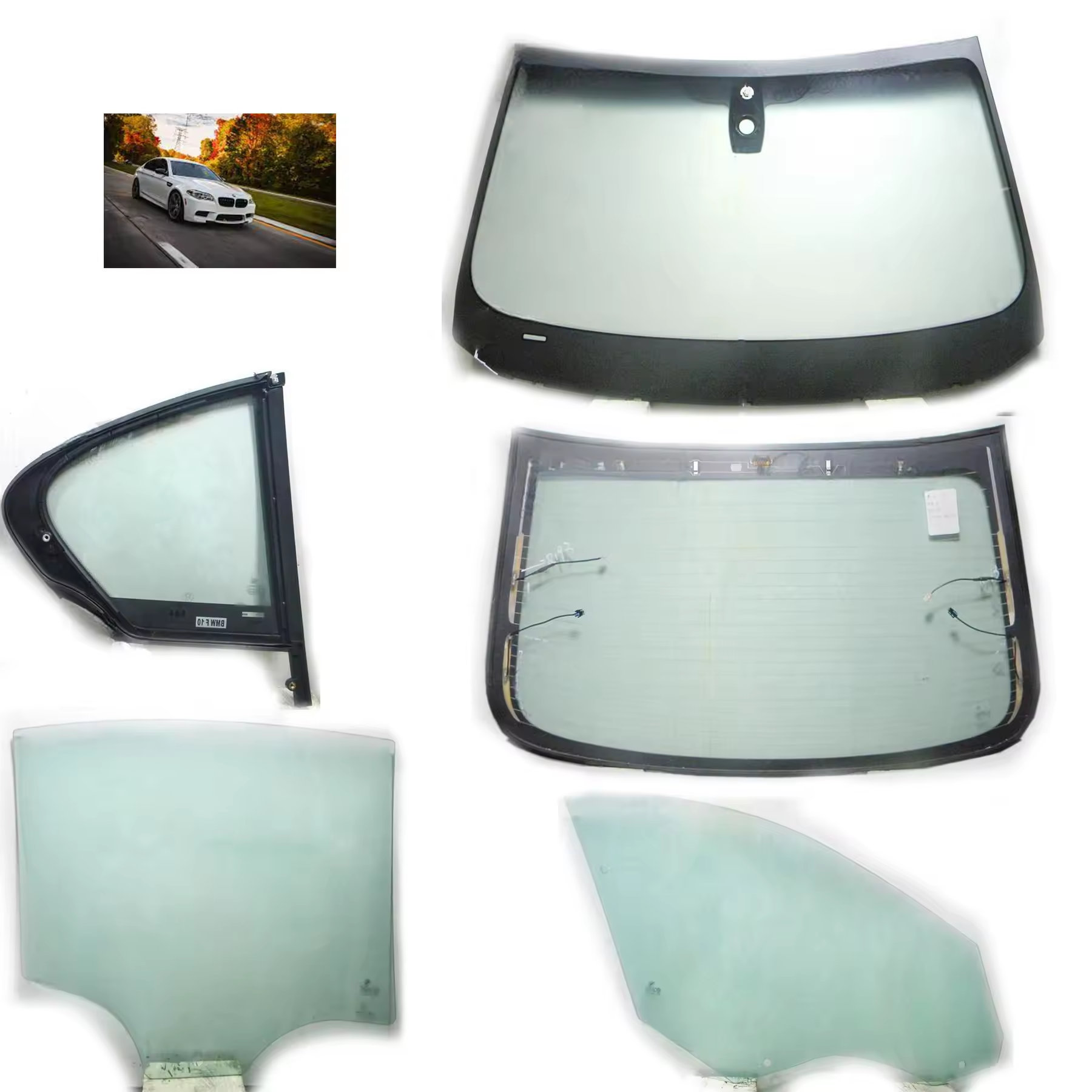
When we think about taking care of our cars, our minds usually go straight to the engine. We worry about oil changes, strange clicking noises, or how much gas we are using. While the engine is definitely the heart of the car, the exterior parts are just as important. Think about it. Your windshield is the only thing protecting your face from the wind and rain at sixty miles per hour. Your mirrors are the only way you can see what is happening behind you without turning your head. Your headlights are the only reason you can drive at night. These parts—the glass, the plastic, and the metal on the outside—are your first line of defense against the world.
Neglecting these parts does not just make your car look old and tired; it can actually make it dangerous to drive. A dirty windshield can blind you when the sun hits it. A loose side mirror can fall off on the highway. A foggy headlight can hide a pedestrian crossing the street. The good news is that maintaining these exterior parts is much easier than fixing an engine. You do not need to be a mechanic, and you do not need expensive tools. You just need a little bit of time, some simple cleaning supplies, and the right knowledge. In this guide, we are going to explore how to care for, clean, and protect the outside of your vehicle. We will cover everything from making your glass invisible to keeping your plastic trim black, ensuring your car looks great and keeps you safe for years to come.
The Windshield More Than Just a Piece of Glass
Your windshield is a marvel of engineering. It is not just normal window glass like you have in your house. It is two layers of glass with a layer of strong plastic sandwiched in the middle. This design keeps the glass from shattering into sharp shards if a rock hits it. It also adds structural strength to the roof of your car. If you roll over, the windshield actually helps keep the roof from crushing down on you. Because it is so important, keeping it clean and undamaged is critical.
The biggest enemy of a windshield is a dirty wiper blade. We will talk about wipers later, but realize that if you drag a dirty piece of rubber across glass, it acts like sandpaper. Over time, this creates thousands of tiny scratches. You might not see them in the shade, but when you drive into the sunset, the whole windshield turns into a glowing white haze that makes it impossible to see. To prevent this, you need to clean your glass regularly. Do not use household glass cleaners that contain ammonia. Ammonia can damage the tint on your windows and dry out the rubber seals around the glass. Use a specific automotive glass cleaner. It is formulated to cut through the oily road film and bug guts that stick to the glass.
You also need to watch out for “chips.” These are the little star-shaped cracks you get when a pebble hits you on the highway. Many people ignore these because they are small. This is a mistake. As the temperature changes—like when you run the defroster on a cold morning—the glass expands and contracts. This stress will eventually turn that tiny chip into a giant crack that runs across your whole view. If you catch a chip early, a repair shop can fill it with clear resin for a very low cost. If you wait until it cracks, you have to replace the entire windshield, which is much more expensive.
Mastering the Art of Wiper Blade Maintenance
We rarely think about our windshield wipers until it starts raining. Then, we turn them on and realize they are streaking, squeaking, and hopping across the glass. A bad wiper blade is incredibly frustrating. It leaves big blurry spots right in your line of sight.
Wiper blades are made of thin rubber. Rubber is a natural material that breaks down over time. The sun cooks it, the cold freezes it, and the ozone in the air rots it. A wiper blade usually only lasts about six months to a year. You can tell they are dying when the rubber starts to split or when they leave permanent streaks of water.
To make them last longer, you should clean them every time you wash your car. Take a paper towel with a little bit of rubbing alcohol or glass cleaner on it. Lift the wiper arm off the glass and wipe the rubber blade itself. You will be shocked at how much black gunk comes off. That black stuff is oxidized rubber and road tar. By removing it, you give the blade a fresh edge to wipe with. Also, be gentle in the winter. If your wipers are frozen to the glass, do not turn them on to break them free. This can tear the rubber instantly or even burn out the wiper motor. Turn on the defroster and use an ice scraper to gently free them before flipping the switch.
Side and Rear Mirrors Eliminating the Blind Spots
Your mirrors are your eyes in the back of your head. But a mirror is only useful if it is pointed in the right direction and if the glass is clean. Many drivers adjust their side mirrors incorrectly. They set them so they can see the side of their own car. While this feels comfortable, it creates massive “blind spots”—areas where a car can hide next to you without you seeing it.
To adjust them correctly, sit in your normal driving position. Lean your head to the left until it touches the driver’s window. Adjust the left mirror until you can just barely see the back corner of your car. Now, lean your head to the right, towards the center console. Adjust the right mirror until you can just barely see the other back corner. When you sit back up straight, you won’t see your own car anymore. You will see the lanes next to you. This means that as soon as a car leaves your rear-view mirror, it enters your side mirror. As soon as it leaves your side mirror, you should see it in your peripheral vision. This setup virtually eliminates blind spots.
Cleaning mirrors requires a gentle touch. The glass in side mirrors is often “first surface” chrome or has heating elements behind it. Use a clean microfiber towel and automotive glass cleaner. Spray the towel, not the mirror. If you spray the mirror directly, the liquid can drip down behind the glass and corrode the electrical motors that move the mirror. Also, be careful with power-folding mirrors. If they get frozen shut in winter, do not force them open by hand. You will strip the plastic gears inside. Pour a little warm (not hot) water over the housing to melt the ice first.
Headlights and Tail Lights Seeing and Being Seen
If the windshield is the eyes of the car, the headlights are the flashlight. Over the last twenty years, car manufacturers switched from using glass for headlight lenses to using polycarbonate plastic. Plastic is lighter and doesn’t break as easily, but it has one major flaw: it oxidizes.
Have you ever seen a car where the headlights look yellow, cloudy, or foggy? That is oxidation. The UV rays from the sun have cooked the outer layer of the plastic. This isn’t just ugly; it is dangerous. A cloudy headlight can block up to 70% of the light output. You might think your bulbs are dim, but actually, the light just can’t get out.
You don’t need to buy new headlights. You can restore them. You can buy a headlight restoration kit at any auto parts store. The process involves using sandpaper to sand off the dead, yellow layer of plastic, and then polishing it until it is clear again. The most important step is the final one: applying a UV sealant. If you sand the lights clear but don’t seal them, the sun will turn them yellow again in a few months. Also, check your bulbs regularly. Walk around the car once a month with the lights on. Check the brake lights by backing up to a wall or a shop window and looking in your mirror to see the red reflection. A burnt-out tail light is the easiest way to get pulled over by the police.
Door Handles and Locks The Daily Touchpoints
We touch our door handles every single time we drive, but we never think about maintaining them until they stick. Door handles are mechanical parts with springs and latches inside. Over time, dirt and water get inside the mechanism, washing away the factory grease. This makes the handle feel stiff. It might not pop back in when you let go, or the key might be hard to turn in the lock.
To fix this, you need lubrication. Do not use oil or WD-40 inside a keyhole. Oil attracts dust. The dust mixes with the oil to create a sticky sludge that will eventually jam the lock completely. Instead, use “graphite powder” or a dry silicone spray. Graphite is a dry lubricant that makes metal slide against metal smoothly without attracting dirt. Puff a little bit into the keyhole and work the key in and out a few times.
For the handle hinges, you can use a white lithium grease spray. Open the door and look for the latch mechanism on the side of the door. Spray a little grease into the moving claw. This keeps the door closing with a satisfying “thud” rather than a metallic clang. Also, look at the paint behind the door handle. You will often see lots of tiny scratches there. These are from your fingernails or rings hitting the paint when you grab the handle. You can remove these scratches with a little bit of polishing compound on a rag, and you can prevent them by installing clear plastic protection film behind the handle.
Bumpers and Plastic Trim Fighting the Fade
Modern cars have a lot of black plastic trim. It is on the bumpers, around the wheel wells, and along the bottom of the doors. When the car is new, this plastic is a rich, deep black. But after a few years in the sun, it turns a sad, chalky grey. This is called “UV degradation.” The sun dries out the natural oils in the plastic.
Many people try to fix this with “tire shine” or oily dressings. This looks great for about two days. As soon as it rains, the oil washes off, usually leaving greasy streaks down the side of your car. To actually fix it, you need a “trim restorer.” These are products that act more like a dye or a sealant. They soak into the pores of the plastic and bond with it.
Apply the restorer with a foam sponge. Be careful not to get it on the paint or the glass, as it can be hard to remove. Let it dry completely. A good quality restorer can keep your plastic looking black for six months to a year. If your plastic is extremely faded (almost white), you might need to use a heat gun. By carefully heating the plastic, you draw the internal oils to the surface, turning it black again. However, this is risky if you don’t know what you are doing, as you can melt the bumper or burn the paint. Stick to the liquid restorers for safety.
The Right Way to Wash and Dry
Most damage to mirrors, glass, and exterior trim actually happens while you are washing the car. If you use the wrong tools, you are just grinding dirt into the surface. The golden rule is: never use a dry towel to wipe a dirty car.
Always use the “Two Bucket Method.” Fill one bucket with soapy water and one bucket with plain rinse water. Dip your wash mitt in the soap, wash a panel (like the hood), and then rinse the mitt in the plain water bucket before getting more soap. This ensures that the dirt you just wiped off doesn’t go back onto the car. Use a microfiber wash mitt, not an old t-shirt or a harsh sponge. Microfiber is designed to lift dirt away from the surface rather than dragging it across the paint.
When it comes to drying, throw away your old bath towels. Bath towels are made of cotton loops that can trap twigs or hard dirt. Use a large “waffle weave” drying towel or a chamois. Drying is important because tap water contains minerals (calcium). If you let the water dry on your windshield or mirrors in the sun, it leaves behind hard white spots called “water spots.” These are surprisingly hard to remove and can etch into the glass over time. Dry the glass first, then the paint, and finally the wheels.
Dealing with Rust and Paint Chips
Rust is like cancer for a car. It starts small, often where a rock has chipped the paint on your hood or near the windshield frame. Once the bare metal is exposed to air and water, it starts to oxidize. If you ignore it, the rust will spread underneath the paint, bubbling it up and eventually eating a hole right through the metal.
Inspect your car regularly. Look closely at the front edge of the hood, the mirrors, and the roof line above the windshield. If you see a tiny chip that goes down to the metal, you need to seal it. You can buy a “touch-up paint pen” from the dealership or an auto parts store that matches your car’s exact color code.
Clean the chip with a little alcohol to remove wax and grease. Then, carefully dab a tiny drop of paint into the hole. You are not trying to paint the whole hood; you just want to fill the divot. Let it dry. This seals the metal off from the oxygen, stopping rust before it can start. If you already see a rust bubble, it is too late for a pen. You will need to sand it down to bare metal and repaint it, which usually requires a professional body shop. The key is prevention.
Seasonal Care Winter vs Summer
Your exterior parts face different enemies depending on the season. In the summer, the enemy is the sun. The heat can melt the glue holding your rear-view mirror to the glass. The UV rays fade your plastic trim and fog your headlights. The best defense in summer is shade. Park in a garage if you can. If you have to park outside, use a windshield sunshade. This protects the dashboard, but it also lowers the temperature inside the car, reducing stress on the window seals.
In the winter, the enemy is ice and salt. If you live in a snowy area, road salt is a killer. It gets into the door handles, the mirror hinges, and the wiper motors. It causes corrosion incredibly fast. You need to wash your car more often in winter, not less. Go to a touchless car wash to blast the salt off.
Be very careful with ice scrapers. A plastic scraper is fine for glass, but never use it on your paint or your plastic headlights. It will leave deep scratches. Also, never pour hot water on a frozen windshield. The thermal shock will shatter the glass instantly. Use a de-icing spray or just run the car’s defroster and wait patiently for the ice to melt. Lift your wiper blades up when parking before a snowstorm so they don’t freeze to the glass.
Conclusion It Is About Pride and Safety
Taking care of your mirrors, windshield, and exterior parts might seem like a lot of work when you read it all at once. But in reality, it is just a series of small habits. It is taking an extra minute to wipe your wiper blades when you get gas. It is parking in the shade when you go to the store. It is noticing that chip in the windshield before it cracks.
When you take care of the outside of your car, the car takes care of you. You can see better at night. You have fewer blind spots. Your doors open smoothly. And let’s be honest, it feels good to drive a car that looks well-cared for. It shows that you have pride in your vehicle.
So, next time you walk out to your car, take a good look at it. Check the headlights. Tap the mirror to make sure it is tight. Run your finger over the wiper blade. These simple checks are the difference between a safe, enjoyable drive and a frustrating breakdown. Keep your glass clear, your lights bright, and your trim black, and your car will serve you well for miles to come.