Every rider focuses on the engine, the tyres, the brakes. These are the glamorous parts of motorcycle maintenance, the ones that get talked about at bike meets and discussed in forums. But there is a category of maintenance that is just as important for safety and significantly more important for staying on the right side of traffic laws, and it tends to get far less attention than it deserves.
Your bike’s lights are how the world sees you. They are how drivers ahead know you are braking. They are how drivers behind know you are turning. They are how oncoming traffic sees you at night on an unlit road. They are how a pedestrian stepping off a kerb knows there is a motorcycle approaching. When your lights are in good condition and working correctly, they are invisible to you. When they are not, the consequences range from a fine at a traffic stop to something much more serious on a dark road at speed.
This blog is going to give you a complete, practical guide to lighting and indicator maintenance on motorcycles. What the different lights on your bike do, why they fail, how to check and maintain them, how to replace bulbs yourself, how to understand the difference between bulb types, and how to keep the entire lighting system in good health for the long term. All of it in straightforward, simple language that any rider can follow.
Understanding the Lights on Your Bike
Before we get into maintenance, it helps to understand what each light on your bike is doing and why it matters.
The headlight is the most critical light on the bike. It serves two purposes. First, it illuminates the road ahead so you can see where you are going in low-light or night conditions. Second, it makes you visible to other road users from the front. Most modern bikes run with their headlight on continuously regardless of time of day, and this is not an accident. Studies consistently show that bikes with headlights on during daylight are significantly more visible to other road users. If your bike has a daytime running mode, use it.
The tail light is a permanently illuminated low-intensity red light at the rear of the bike that tells road users behind you that there is a vehicle ahead. It should be on whenever your ignition is on. It is distinct from the brake light, which is a brighter version of the same red light that activates when you apply either brake. Both are critical for rear visibility, particularly in traffic and at night.
The brake light is specifically safety critical because it is the signal that tells the driver behind you that you are slowing down. A brake light that fails to illuminate when you brake removes a crucial warning from the driver behind you and creates a genuine rear-end collision risk. Checking that your brake light activates with both the front brake lever and the rear brake pedal is something every rider should do regularly.
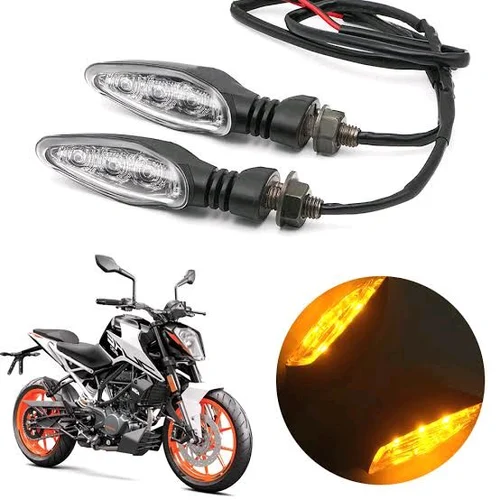
The indicators, also called turn signals or blinkers, communicate your intention to change direction to other road users. They need to be bright enough to be seen in daylight, quick enough to be noticed, and consistent enough in their flash rate to clearly communicate what you are doing. Indicators that are dim, slow, or not working at all leave other road users without the information they need to respond safely to your movements.
Many bikes also have a speedometer light, an instrument panel illumination, and warning lights for various systems. While these do not directly affect road safety in the same way as the primary lights, keeping them functional ensures you have full visibility of your instrument information and that warning signals are not being missed.
Why Lights and Indicators Fail
Understanding why failures happen helps you anticipate them and catch them before they create problems.
Bulb failure from age and use is the most common cause. Incandescent bulbs have a finite lifespan and eventually the filament inside breaks from the combination of vibration and heat cycling. Motorcycle lighting is particularly susceptible to vibration-related bulb failure because bikes transmit significantly more vibration through their frames than cars do. A bulb that would last years in a stationary application may fail much sooner under the constant vibration of road use.
Corrosion in the bulb holder and connector is a pervasive problem on motorcycles because they are exposed to water, road spray, and humidity in a way that other vehicles are not. When water gets into a bulb holder, it creates corrosion on the metal contacts that increases electrical resistance. The result is a dim light rather than full brightness, intermittent operation, or complete failure even though the bulb itself is fine. Cleaning corroded contacts is often the fix for a light that seems to be failing but does not actually need a new bulb.
Blown fuses protect the electrical system from damage when a fault creates excessive current flow. If a light stops working suddenly rather than gradually, check the fuse for that circuit before replacing the bulb. A fuse that blows once may just have been aged and weakened. A fuse that blows repeatedly after replacement indicates a short circuit or fault in the wiring that needs proper investigation rather than just replacing the fuse again.
Wiring damage from vibration, heat, or physical contact with hot or sharp surfaces causes open circuits where the electrical connection is broken, or short circuits where wiring contacts something it should not. Wiring problems are often intermittent, meaning the light works sometimes but not others, which makes them more frustrating to diagnose than straightforward bulb failures.
Water ingress into light housings through damaged or deteriorated seals allows moisture to collect inside the lens. This moisture causes corrosion of internal components over time and can create a milky, hazy appearance on the inside of the lens that reduces light output significantly. Checking the seals around your light housings and replacing any that show cracking or deterioration prevents moisture ingress before it becomes a problem.
Regular Checks: What to Do and How Often
The most effective lighting maintenance is regular checking combined with prompt attention to anything that is not working correctly.
The pre-ride check should include a lighting test that takes about sixty seconds. Turn the ignition on and walk around the bike. Check that the headlight is on. Check that both indicators flash when you activate them on each side. Check that the tail light is illuminated. Then ask someone to watch the rear of the bike, or use a wall or garage door as a reflection, while you apply each brake to confirm the brake light illuminates with both the front lever and the rear pedal.
This sixty-second check catches failures before you ride rather than discovering them when a traffic officer pulls you over or, worse, when a vehicle hits you from behind on a dark road because your brake light was not working. Building it into your pre-ride routine as automatic as checking your mirrors takes very little time and provides genuinely important information.
A more thorough check every month or every couple of thousand kilometres involves looking more closely at the condition of the light housings, lenses, and connections. Look for any cracks in the lens covers. Look for condensation or hazing on the inside of lenses. Check that all light housings are securely mounted and have not vibrated loose. Check that the wires going into each light housing are not showing signs of fraying, rubbing, or heat damage.
Check the flasher relay, which controls the flash rate of your indicators, as part of your regular electrical check. A relay that is beginning to fail often shows itself through indicators that flash faster or slower than normal before failing completely. Most flasher relays are inexpensive and easy to replace.
How to Replace Bulbs Yourself
Replacing bulbs is one of the most accessible DIY maintenance tasks on any motorcycle. Most bulb replacements require only a screwdriver, sometimes a set of Allen keys, and a replacement bulb. The process is straightforward once you know the steps.
Before you start, identify the correct replacement bulb for your bike. Bulb specifications vary between models and using the wrong bulb can cause problems ranging from a fuse blow to damage to the light housing from excessive heat. Your bike’s owner manual will list the correct bulb specification for each light. If you do not have the manual, the bulb itself usually has its type and wattage printed on it, or you can check an online parts catalogue for your specific model.
Always disconnect the ignition before replacing a bulb. This is not always strictly essential for safety but it prevents any possibility of an electrical surprise and is simply good practice.
For the headlight on most bikes, access is through the back of the headlight housing. There is usually a rubber dust cover that pulls off, behind which is a retaining spring clip or a ring that holds the bulb in place. Release the clip, pull the bulb out, disconnect the wiring connector, connect the new bulb, and reassemble in reverse order. Handle halogen bulbs, which are used in many headlights, with a clean cloth or the packaging rather than with bare fingers. The natural oils from skin transferred onto a halogen bulb can create a hot spot when the bulb reaches operating temperature that significantly shortens its life.
For tail lights and brake lights, access is usually from behind the rear bodywork or through a small panel that either unscrews or clips off. On some bikes the lens unscrews from the outside. The bulb is typically a bayonet type that presses in and twists to lock, or a wedge type that simply pulls out.
For indicators, access varies by design. Some have lenses that unscrew to reveal the bulb directly. Others access the bulb from behind through the indicator housing. Indicator bulbs are almost always simple bayonet or wedge types that are quick to replace.
After fitting any new bulb, test it before reassembling covers and panels. Discovering that the new bulb is also not working, due to a contact issue or a blown fuse, is much less frustrating before you have put everything back together than after.
Understanding Bulb Types: Halogen, LED, and Beyond
When you replace a bulb, you have options that go beyond simply replacing like for like. Understanding the different bulb technologies helps you make informed choices.
Halogen bulbs are the traditional standard and are still fitted to many bikes from the factory. They produce a warm yellow-white light, are inexpensive, and are straightforward to replace. Their downsides are relatively high power consumption, significant heat generation, and a lifespan that is shorter than newer technologies.
LED bulbs and lighting systems have become increasingly common as both factory fitment and aftermarket upgrades. LEDs are significantly more efficient than halogens, consuming less electrical power to produce more light output. They also run cooler, which extends the life of the housing and surrounding components, and they last much longer before failing. For tail lights and indicators specifically, LED conversion kits are a popular and relatively simple upgrade that improves both brightness and reliability.
For headlights, LED conversions require more care. Direct LED replacement bulbs that fit into a standard halogen housing do not always perform as well as a purpose-designed LED headlight unit because the optics in the housing are designed for the light pattern of a halogen bulb. A poorly aimed or designed LED headlight conversion can create glare for oncoming traffic, which is both dangerous and illegal. If you are upgrading to LED for your headlight, either use a purpose-designed replacement unit or carefully check the light pattern after installation to confirm it is correctly directed.
HID, or High Intensity Discharge, lighting is another option that was popular for headlights before LEDs became more affordable. HID produces a very bright, white or slightly blue-white light. It requires a ballast unit to operate and the installation is more complex than a simple bulb swap. For most riders considering a headlight upgrade today, LED is the simpler and more reliable option.
Keeping the System Healthy Long Term
Beyond individual bulb replacement, looking after the overall electrical health of your lighting system ensures that problems occur less frequently and are less damaging when they do occur.
Applying a thin layer of dielectric grease to electrical connectors when you work on them is a simple and highly effective way to prevent corrosion. Dielectric grease is a non-conductive grease that seals the connector from moisture without affecting electrical flow. It is inexpensive, available at any auto parts store, and makes a significant difference to how well connectors hold up over time in wet conditions.
Keeping light lenses clean improves light output noticeably. Dirt, road film, and bug residue on the outside of lenses reduce light transmission. A regular clean with mild soapy water and a soft cloth is all that is needed. For plastic lenses that have become scratched and hazy, a plastic polish product can restore significant clarity.
Checking the headlight aim periodically ensures that your headlight is illuminating the road effectively rather than pointing at the sky or at the road five metres in front of the wheel. The aim on most bikes can be adjusted through small screws on the headlight housing. The correct aim varies by bike model and is specified in the owner manual. A headlight that points too low provides poor illumination at distance. One that points too high creates glare for oncoming traffic without helping you see the road.
Battery health underpins the whole lighting system. A battery that is weak or beginning to fail provides insufficient voltage to the electrical system, which causes lights to run dim and can cause erratic behaviour in electronic systems including LED lighting controllers. If your lights seem generally dim or if electronic lighting components behave strangely, checking battery voltage and health is a useful starting point.
Staying Road Legal and Staying Safe
Your bike’s lighting is both a legal requirement and a safety system. Traffic laws require working headlights, tail lights, brake lights, and indicators. A bike with failed lighting can be stopped, issued an on-the-spot defect notice, and in some cases declared unroadworthy until the fault is corrected. Beyond the legal dimension, the safety case for maintaining your lighting is completely straightforward. Other road users can only respond to you if they can see you. Making yourself as visible as possible through well-maintained, correctly aimed, bright lighting is one of the simplest and most effective things you can do for your safety on the road.
Regular checking, prompt replacement of anything that fails, occasional cleaning, and attention to the condition of connections and seals are all that is required. None of it is complicated or expensive. And the return on that small investment of time and money is a bike that is fully visible, fully compliant, and fully equipped to keep you safe every time you ride.