
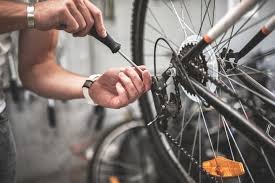
The Chain as the Unsung Hero of Cycling Performance
The bicycle chain occupies a unique position in the machinery of cycling, serving as the critical link between the power generated by the rider’s legs and the forward motion that results from that effort. Despite its humble appearance and relatively low cost compared to other components, no part of the bicycle works harder, faces more challenging conditions, or has a greater impact on the quality of the riding experience than this simple loop of metal pins and rollers. Every watt of power transferred from pedals to rear wheel must pass through the chain, which articulates thousands of times per mile, bends around chainrings and cogs under tremendous tension, and operates while being bombarded by road grit, water, winter salt, and the chemical residues of lubricants. The difference between a well-maintained chain and a neglected one is immediately apparent to any experienced cyclist, manifesting as smooth quiet shifting versus noisy gritty operation, efficient power transfer versus energy-wasting friction, and components that last for thousands of miles versus those that wear out in fractions of that distance. Understanding how to properly maintain this essential component transforms the cycling experience while saving significant money over time, as a well-cared-for chain protects the far more expensive cassette and chainrings from premature wear. This guide explores everything cyclists need to know about keeping their chains in optimal condition, from the basic tools required to the advanced techniques that separate casual riders from dedicated enthusiasts.
Understanding Chain Anatomy and Function
Before diving into maintenance procedures, cyclists benefit from understanding exactly what a bicycle chain is and how it performs its essential function of transferring power from the front chainrings to the rear cassette. A modern bicycle chain consists of a series of alternating inner and outer links held together by pins that allow the chain to flex around the teeth of chainrings and sprockets while maintaining the strength to transmit hundreds of watts of power without breaking. Each link contains rollers that rotate around bushings, creating the rolling contact with gear teeth that reduces friction and enables the smooth engagement that characterizes quality shifting. The side plates provide the structural backbone of the chain, transferring tension from pin to pin across the entire length while maintaining the precise internal spacing that allows the chain to fit between gear teeth. The dimensions of bicycle chains have been standardized to a remarkable degree, with most modern derailleur bikes using 1/2 inch pitch between pins and 3/32 inch internal width, though some older or specialty bikes may use different standards. The interaction between chain and gear teeth creates wear on both components, with the chain stretching, pins wearing, and rollers becoming elongated over thousands of miles of use. This “chain stretch” is actually pin and bushing wear that increases the effective length of the chain, causing it to fit loosely on gear teeth and accelerate wear of the much more expensive cassette and chainrings. Understanding this relationship explains why regular chain maintenance and timely replacement protects the entire drivetrain system, saving money and preserving performance.
The Essential Tool Kit for Chain Maintenance
Proper chain maintenance requires a modest investment in tools that pay for themselves many times over through extended component life and improved riding experience. A quality chain checker tool represents the most important investment, as it provides objective measurement of chain wear that eliminates guesswork about when replacement is necessary. These inexpensive tools measure the distance between a specific number of links and indicate when the chain has stretched to the point where it will accelerate cassette and chainring wear. Degreasing tools and supplies form the next essential category, including chain cleaning devices that clamp around the chain and rotate it through brushes while solvent cleans between rollers, or simply a stiff brush and pan for manual cleaning. Degreasing solvents specifically formulated for bicycle chains cut through accumulated grime without damaging the metal or leaving residues that contaminate fresh lubricant. Lubricants themselves come in many formulations designed for different conditions, with wet lubes for rainy weather, dry lubes for dusty conditions, and ceramic or wax-based options offering varying combinations of durability and cleanliness. A chain tool for removing and installing chains is essential for replacement and for thorough cleaning that requires chain removal, with different tools available for standard chains and for the special master link chains common on modern bikes. Rags, brushes, and disposable gloves complete the toolkit, making the inevitable mess of chain maintenance manageable and protecting hands from harsh solvents and accumulated grime. The total investment for quality tools and supplies falls far below the cost of replacing a worn-out cassette and chainrings, making proper equipment a sound financial decision for any regular cyclist.
The Critical Importance of Regular Cleaning
Dirt and grime accumulating on a bicycle chain act as an abrasive paste that grinds away at pins, rollers, and gear teeth with every rotation, dramatically accelerating wear while robbing the rider of power through increased friction. Road grit contains microscopic particles of silica and other hard minerals that embed themselves in the lubricant film and create a lapping compound effect, polishing away metal wherever surfaces move against each other. The difference in wear rate between a regularly cleaned chain and one that runs dirty can reach factors of three to five times, meaning a chain that might last three thousand miles with regular cleaning could be worn out in one thousand miles of neglect. Cleaning frequency depends on riding conditions, with dry pavement riding allowing longer intervals while wet weather, gravel roads, or winter salt demanding much more frequent attention. A simple test of running the chain through a clean rag while backpedaling reveals how much dirt has accumulated, with clean rag indicating adequate cleanliness and dirty rag signaling that cleaning time has arrived. The cleaning process should begin with application of degreaser to break down the old lubricant and the grime trapped within it, followed by agitation with brushes or a chain cleaning device to work the solvent between rollers and plates. Thorough rinsing with water or additional solvent removes the dissolved grime, after which the chain must be completely dried before fresh lubricant is applied. Any moisture trapped under fresh lubricant will cause rust from within, destroying the chain from the inside out in ways that external appearance may not reveal until structural failure occurs.
Lubrication Science and Application Technique
The lubricant applied to a bicycle chain serves the critical function of reducing friction between the pins and rollers where the majority of wear occurs, while also protecting against corrosion and helping to flush away contaminants that penetrate between moving parts. The ideal lubricant flows into the tiny clearances between pins and bushings where wear actually happens, then remains in place under the extreme pressures of power transmission while resisting the centrifugal force that tries to fling it off the rotating chain. Wet lubricants formulated with heavier oils excel in wet conditions where water would wash away lighter products, but their thickness attracts and holds dirt that accelerates wear in dry dusty environments. Dry lubricants use lighter carriers that evaporate after application, leaving behind lubricating solids like wax or Teflon that provide low friction without the dirt-attracting stickiness of wet oils. Ceramic and graphene-infused lubricants represent the cutting edge of chain lubrication, offering extremely low friction coefficients and exceptional durability at premium prices. The technique of application matters as much as the product chosen, with the goal being to get lubricant between the rollers and pins rather than simply coating the outside of the chain. Applying lubricant to the inside of the chain while backpedaling slowly allows capillary action to draw the fluid into the clearances where it actually provides benefit. After application, the chain should be wiped thoroughly to remove excess lubricant from the outside surfaces, as lubricant on the outside plates serves no purpose and simply attracts dirt that will eventually work its way into the mechanism. Allowing the lubricant to penetrate for several hours or overnight before the first ride gives it time to fully migrate into the clearances where it provides the most benefit.
Measuring Chain Wear and Knowing When to Replace
The concept of chain “stretch” is somewhat misleading, as the metal itself does not actually elongate but rather the pins and bushings wear, increasing the effective distance between links and creating a longer chain that no longer fits gear teeth properly. This wear occurs gradually over thousands of miles, with the rate accelerating as the chain becomes dirtier and as the surface hardening wears through to softer underlying metal. Measuring chain wear requires a simple tool that checks the distance between a specific number of links and indicates the percentage of elongation that has occurred. Most chain wear indicators use a go/no-go gauge that drops into place when wear reaches 0.5 percent or 0.75 percent, with the lower threshold representing the point at which replacement is advisable to protect the cassette and chainrings. Waiting until 0.75 percent wear before replacement risks accelerated wear of the more expensive drivetrain components, making the 0.5 percent replacement interval the more conservative and cost-effective approach. A chain that has reached 0.75 percent wear will have caused measurable wear to the cassette and chainrings, meaning that a new chain installed at this point may skip on the worn teeth of the old components. Different chain checkers from various manufacturers may give slightly different readings, making it advisable to use the same tool consistently and replace based on trend rather than absolute numbers. The frequency of chain replacement depends entirely on maintenance quality and riding conditions, with well-maintained chains on clean roads lasting three to five thousand miles while neglected chains in gritty conditions may need replacement in one thousand miles or less.
The Relationship Between Chain, Cassette, and Chainrings
Understanding how these three components interact as a system explains why timely chain replacement protects the larger investment in cassette and chainrings, while neglect of chain maintenance leads to expensive cascading failures. A new chain fits precisely on new cassette and chainring teeth, with the rollers seating fully between teeth and the load distributed evenly across the engagement surface. As the chain wears, the increasing distance between pins means that the rollers no longer sit properly on the teeth, concentrating load on the tips of the teeth rather than distributing it across the full profile. This concentrated loading accelerates wear of the cassette cogs and chainring teeth, which begin to develop a hooked shape that causes poor shifting and eventually prevents new chains from engaging properly. Replacing the chain at the first sign of measurable wear keeps the load on cassette and chainrings within their design parameters, allowing these components to last through multiple chain replacements. Once a cassette has become worn by a neglected chain, installing a fresh chain will result in skipping under load because the new chain’s precisely spaced rollers cannot engage securely with the worn, hooked teeth. At this point, the only solution is replacement of both cassette and chain, an expense that far exceeds the cost of timely chain replacement and the minimal investment in maintenance tools and supplies. The economics of drivetrain maintenance strongly favor vigilance, with each dollar spent on chain care saving multiple dollars in avoided component replacement.
Chain Removal and Installation Techniques
While many maintenance tasks can be performed with the chain on the bike, certain situations require removal for thorough cleaning or replacement, making chain tool proficiency an essential skill for any cyclist who maintains their own equipment. Traditional chains without master links require pushing a pin partially out to separate the chain, then carefully reinserting that same pin or using a replacement pin to reconnect. This operation requires precision and feel, as pushing the pin too far out makes reinsertion difficult while not pushing far enough prevents separation. The chain tool must be aligned perfectly with the pin to avoid bending the tool or damaging the chain plates, and the reinserted pin must be checked to ensure it protrudes equally on both sides for proper function. Modern chains increasingly feature master links that simplify removal and installation dramatically, allowing the chain to be separated by compressing the link plates and sliding them apart without any pin manipulation. These master links must be properly engaged and checked for security before riding, as a master link that opens during riding can cause catastrophic damage to the frame or rider. When reinstalling a chain, ensuring proper routing through the derailleur pulleys and correct length for the specific drivetrain combination prevents shifting problems and chain damage. The directionality of some chains must be observed, with external plates shaped to facilitate shifting and internal clearances optimized for the specific tooth profiles of modern cassettes.
Special Considerations for Different Riding Conditions
The optimal chain maintenance protocol varies significantly based on where and when a cyclist rides, with different environments demanding different approaches to cleaning, lubrication, and inspection frequency. Dry, dusty conditions call for frequent cleaning and the use of dry lubricants that minimize dirt attraction, with the trade-off being more frequent application as the lubricant wears away. Wet conditions demand wet lubricants that resist washing away, but these same conditions accelerate contamination and require more frequent cleaning to remove the grit that rain splashes onto the drivetrain. Winter riding in areas where roads are salted introduces the additional challenge of corrosion, requiring even more diligent cleaning to remove salt residue that will destroy a chain from the outside in if left to accumulate. Gravel and off-road riding subjects chains to continuous bombardment with abrasive particles, making cleaning after every ride a reasonable practice to prevent accelerated wear. Indoor trainer use creates the opposite problem of minimal contamination but high heat and friction from stationary operation, requiring lubrication optimized for these conditions and attention to the sweat that can drip onto the drivetrain during intense efforts. Commuters facing varied conditions throughout the year benefit from adjusting their maintenance protocols seasonally, with more frequent attention during winter months and the ability to extend intervals during ideal summer riding. The key across all conditions is observation and responsiveness, with riders developing the habit of inspecting their chain before and after rides rather than relying on fixed schedules that may not match actual conditions.
The Waxing Alternative for Ultimate Drivetrain Efficiency
Some cycling enthusiasts take chain maintenance to its highest level through hot waxing, a process that replaces liquid lubricants with molten wax that penetrates the chain and then solidifies into a dry, clean-running coating. Waxing begins with complete degreasing of a new or thoroughly cleaned chain, removing every trace of factory lubricant or accumulated grime through multiple solvent baths and agitation. The clean, dry chain is then immersed in molten wax formulated specifically for bicycle chains, often containing additives like PTFE or ceramic particles that further reduce friction. The wax penetrates between rollers and plates through capillary action, coating all internal surfaces with a solid lubricant that provides extremely low friction while attracting absolutely no dirt. After cooling, the chain is reinstalled and run briefly to break free the excess wax, leaving a drivetrain that runs quietly, shifts smoothly, and stays remarkably clean compared to oil-lubricated alternatives. The friction reduction from waxing can save several watts of power at typical riding intensities, a meaningful efficiency gain for performance-oriented cyclists. The trade-off is the more involved process and the need to re-wax at intervals of approximately three to five hundred miles, depending on conditions, as the wax gradually wears away from the contact surfaces. Waxed chains require removal for re-waxing, adding steps that liquid lubricant users avoid, but proponents consider the cleanliness and efficiency benefits well worth the additional effort. The initial investment in a slow cooker or wax pot dedicated to chain waxing adds to the equipment list but pays for itself over time through extended chain and component life.
Troubleshooting Common Chain Problems
Even with meticulous maintenance, chains occasionally develop issues that require diagnosis and correction to restore proper function and prevent further damage. Chain skipping under load, where the chain jumps forward on the cassette when power is applied, often indicates either a worn chain on worn cassette teeth or a stiff link that cannot articulate properly through the derailleur. Chain noise that persists after cleaning and lubrication may indicate wear that has progressed beyond the point where lubrication helps, or may result from improper derailleur adjustment causing the chain to rub against adjacent cogs. Chain rust, whether surface rust from humidity or deeper corrosion from salt exposure, requires immediate attention to prevent permanent damage, with light rust sometimes removable through aggressive cleaning and lubrication while heavy rust necessitates replacement. Chains that consistently come off the chainrings may indicate incorrect chain length, worn chainring teeth, or a derailleur limit adjustment issue that allows the chain to derail. Stiff links, where one or more joints do not pivot freely, create the skipping sensation and can sometimes be worked loose by flexing the chain sideways, though severe cases may require link replacement. Chains that squeak despite adequate lubrication may have contamination between plates that requires more thorough cleaning than standard procedures provide. Developing the ability to diagnose these issues through observation and systematic troubleshooting keeps small problems from becoming major failures that leave cyclists stranded or cause expensive component damage.
The Economics of Chain Maintenance
Viewing chain maintenance through an economic lens reveals one of the most favorable return-on-investment opportunities in all of cycling, where modest expenditures of time and money yield substantial savings in avoided component replacement. A quality chain costs between twenty and fifty dollars depending on speed level and brand, while a cassette ranges from fifty to two hundred dollars or more, and chainrings add another fifty to one hundred fifty dollars to the replacement bill. A neglected chain that wears to 0.75 percent or beyond will damage the cassette and chainrings sufficiently that they must be replaced together, a total cost of one hundred fifty to four hundred dollars or more for higher-end components. Proper chain maintenance that includes regular cleaning, appropriate lubrication, and timely replacement at 0.5 percent wear allows the cassette and chainrings to last through three or four chain replacements, spreading their cost across many more miles. The tools and supplies for proper chain maintenance, including chain checker, degreaser, lubricant, brushes, and rags, total well under one hundred dollars and last for years of regular use. The time investment of perhaps ten to fifteen minutes per week for cleaning and lubrication, plus occasional replacement sessions, represents a tiny fraction of the hours spent riding and maintaining the rest of the bicycle. For cyclists who pay shops for maintenance, the savings compound further, as shop labor rates for drivetrain replacement far exceed the minimal time required for owner-performed chain care. The economic case for diligent chain maintenance is so compelling that it raises the question of why any regular cyclist would neglect this simple, inexpensive practice.
Environmental Considerations in Chain Care
The environmental impact of chain maintenance deserves attention from conscientious cyclists, as the solvents, lubricants, and disposable materials involved have consequences beyond the immediate benefits of drivetrain protection. Traditional degreasers and solvents often contain volatile organic compounds that contribute to air pollution and require careful disposal to avoid contaminating water systems. Biodegradable degreasers formulated from citrus or other plant-based solvents offer effective cleaning with reduced environmental impact, though they still require proper disposal rather than simply washing down drains. Lubricants that wash off chains during wet riding enter the environment directly, making the choice of less toxic formulations and the practice of wiping excess lubricant thoroughly matters beyond the bike. The rags and paper towels used in chain cleaning become contaminated with oil and grease, requiring disposal as hazardous waste in jurisdictions with proper facilities rather than simply throwing in household trash. Waxing eliminates many of these environmental concerns, as the wax itself is non-toxic and the process generates minimal waste compared to solvent-based cleaning. The extended component life resulting from good chain maintenance reduces manufacturing demand and the environmental footprint of producing replacement parts, representing an indirect but meaningful environmental benefit. Cyclists who consider the full lifecycle of their maintenance practices can minimize environmental impact while still protecting their drivetrains effectively.
Developing a Sustainable Maintenance Routine
The key to successful chain maintenance lies not in occasional heroic efforts but in developing sustainable habits that integrate naturally into regular cycling routines without becoming burdensome. A quick post-ride inspection while wiping down the bike reveals chain condition and identifies when cleaning has become necessary, catching problems before they escalate. Scheduling chain maintenance as part of a regular weekly or biweekly routine based on typical riding conditions prevents the accumulation of grime that makes cleaning more difficult and less effective. Keeping supplies organized and accessible reduces the friction of starting maintenance, with a dedicated drawer or container holding chain checker, degreaser, lubricant, brushes, and rags ready for immediate use. Combining chain care with other regular maintenance tasks like tire pressure checks and brake inspection creates an efficient workflow that covers multiple needs in a single session. Tracking chain mileage and wear measurements in a simple log or smartphone app provides objective data that guides replacement timing and reveals patterns in how different conditions affect wear rates. Building these habits to the point where they become automatic transforms chain maintenance from a chore into an integrated part of the cycling experience, no more remarkable than pumping tires or adjusting saddle height. The result of this consistent attention is a drivetrain that performs flawlessly for thousands of miles, shifting crisply, running quietly, and delivering every watt of power to the road where it belongs.
The Satisfaction of a Perfectly Functioning Drivetrain
Beyond the practical benefits of extended component life and reliable performance lies the qualitative satisfaction that comes from riding a bicycle with a perfectly maintained chain. The quiet whir of a clean, properly lubricated drivetrain contrasts dramatically with the gritty grinding of a neglected chain, transforming the sensory experience of riding. Shifts that click crisply into place without hesitation or noise indicate that chain and cassette teeth are engaging exactly as designed, with none of the vagueness that signals impending wear. The efficiency of power transfer, while difficult to quantify without instruments, manifests as the feeling that every pedal stroke moves the bike forward without the subtle losses that friction creates. The visual cleanliness of a well-maintained drivetrain pleases the eye and reflects pride in equipment that carries the rider through thousands of miles of adventure. The knowledge that proactive maintenance has prevented the inconvenience and expense of breakdowns or premature component replacement adds peace of mind to every ride. For cyclists who truly love the experience of riding, these qualitative benefits matter as much as the economic calculations, making chain maintenance not a chore but an expression of the care and attention that cycling deserves. The chain, humble as it appears, rewards this attention with performance and longevity that transforms it from a mere component into a trusted partner in every journey.