
There is something almost magical about the electrical system in a vehicle. You turn a key, and a massive engine roars to life. You flip a switch, and beams of light cut through the darkness. You press a button, and the windows roll down. It is convenient, it is powerful, and we rely on it completely. But because electricity is invisible, it is also one of the most intimidating parts of a car to fix when things go wrong. When a tire is flat, you can see it. When a hose leaks, you can see the puddle. But when an electrical problem strikes, you often get no warning. You might turn the key and hear nothing but a terrifying silence. Or maybe your radio works, but your headlights flicker. Or perhaps a fuse blows every time you turn on the wipers.
Many car owners feel helpless when facing electrical gremlins. They assume they need a degree in physics to understand what is happening. But the truth is, automotive electricity follows very simple, logical rules. It is like plumbing with water. There is a source (the battery), pipes (the wires), and things that use the water (the lights and motors). If something isn’t working, it means the flow is blocked, leaking, or disconnected. You don’t need expensive equipment to find the problem. You just need a logical approach, a simple tool called a multimeter, and a little bit of patience. This guide is going to walk you through the basics of automotive electrical troubleshooting. We will use plain English to explain the concepts of voltage, current, and resistance, and show you how to track down even the trickiest problems without losing your mind.
Understanding the Basics Voltage Current and Resistance
Before you touch a wire, you need to understand the three musketeers of electricity: Voltage, Current, and Resistance. Think of electricity like water flowing through a garden hose.
Voltage (measured in Volts) is like the water pressure. It is the force pushing the electricity through the wire. In a car, your battery provides about 12.6 volts of pressure when the engine is off, and the alternator provides about 14 volts when the engine is running. If you have low voltage (like a dead battery), it is like having low water pressure; nothing will work properly.
Current (measured in Amps) is the water itself. It is the actual flow of electrons moving through the wire to do the work. A big starter motor needs a huge amount of current (a fire hose), while a tiny dashboard LED needs very little (a drinking straw).
Resistance (measured in Ohms) is anything that slows down the flow. It is like a kink in the hose or a narrow nozzle. Every wire and device has some resistance. Corrosion—that green or white gunk you see on old connectors—adds unwanted resistance. If resistance gets too high, the voltage drops, and the current stops flowing. Troubleshooting is basically just using a tool to measure these three things to find out where the “water” is getting stuck.
The Essential Tool How to Use a Multimeter
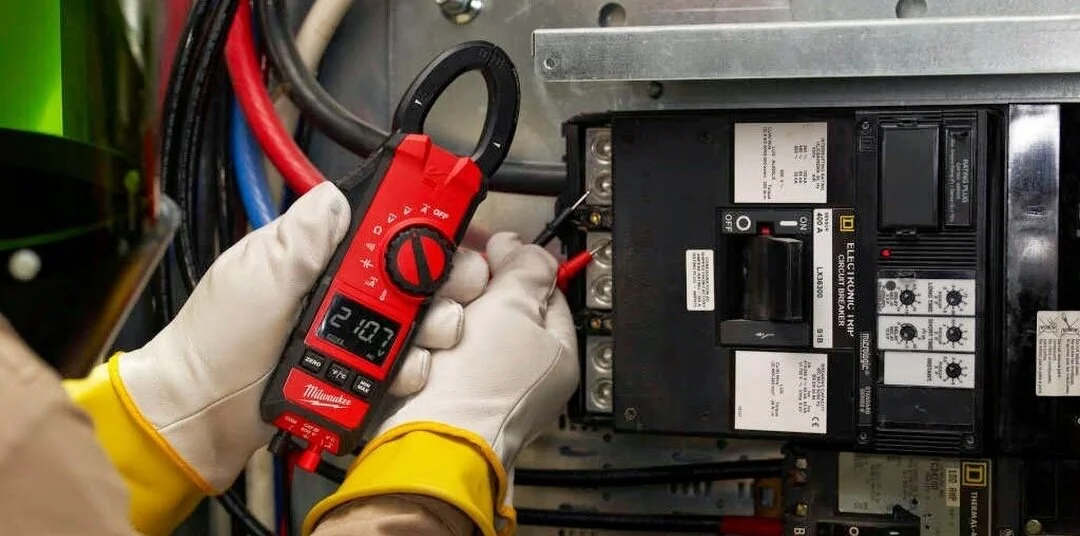
You cannot see electricity, so you need a tool that can see it for you. That tool is a Digital Multimeter. You can buy a basic one at any hardware store for twenty dollars. It looks like a small box with a screen and two probes: a red one (positive) and a black one (negative).
To use it, you usually turn the dial to the setting you want. To check a battery, turn the dial to “DC Volts” (often looks like a V with straight lines). Touch the red probe to the positive battery post and the black probe to the negative post. The screen should read around 12.6 volts. To check for a broken wire, turn the dial to “Continuity” (often looks like a sound wave symbol). Touch the two probes together, and the meter should beep. This means there is a continuous path. If you touch the probes to the two ends of a wire and it beeps, the wire is good. If it stays silent, the wire is broken internally. To check a fuse, you can use the Continuity setting or the “Ohms” setting (looks like a horseshoe symbol). Mastering this simple tool is the key to solving 99% of electrical problems. It takes the guesswork out of the equation.
The Battery The Heart of the System
The most common electrical problem is also the simplest: the battery. The battery is the storage tank for your electricity. If the tank is empty, nothing else matters. When you have a “no-start” condition (you turn the key and nothing happens), start here.
First, look at the connections. Are the metal clamps on the battery posts tight? You should not be able to wiggle them by hand. Are they clean? If you see white, blue, or green powder (corrosion), that is dried acid blocking the flow. Clean it off with a mixture of baking soda and water and a wire brush.
Next, test the voltage. Set your multimeter to DC Volts. A fully charged battery should read about 12.6 volts. If it reads 12.2 volts, it is half dead. If it reads 10 volts or less, it is likely dead and might have a bad cell. However, voltage isn’t the whole story. A battery can show 12 volts but have no “Amps” (muscle) behind it. This is why auto parts stores do a “Load Test” for free. They put a heavy strain on the battery to see if it holds up. If your battery is more than 3 to 5 years old and giving you trouble in cold weather, it is usually time to replace it.
The Alternator The Power Plant
The battery starts the car, but the alternator keeps it running. Once the engine is spinning, the alternator takes over. It generates electricity to fire the spark plugs, run the lights, and—most importantly—recharge the battery for the next start.
If your car dies while you are driving, or if your headlights get dim when you stop at a red light and get bright when you rev the engine, your alternator is likely failing. To test it, start the car. Set your multimeter to DC Volts. Touch the probes to the battery terminals again. With the engine running, the voltage should jump up to between 13.5 and 14.5 volts. This means the alternator is pushing power back into the battery.
If the voltage stays at 12.6 or drops lower while the engine is running, the alternator is dead. It is not charging. Eventually, the car will run off the battery until the battery is drained, and then the engine will shut off. Alternators wear out because they have moving parts (brushes and bearings) inside. It is a common failure point, usually around 100,000 miles.
The Fuse Box The First Line of Defense
When a specific component stops working—like just your radio, or just your horn—it is almost always a fuse. A fuse is a safety device designed to melt. It is a tiny piece of metal wire inside a colored plastic casing. It is calibrated to handle a specific amount of current (e.g., 10 Amps). If a wire shorts out or a motor gets stuck and tries to pull 20 Amps, the fuse melts instantly, cutting the circuit. This sacrifice saves your car from catching on fire.
Your car has at least two fuse boxes: one under the hood (for big engine stuff) and one inside the cabin (for lights and radio). The cover usually has a diagram telling you which fuse does what. Pull out the fuse for the broken item. Hold it up to the light. Inside, you will see a metal U-shape. If the metal is solid, the fuse is good. If the U is broken or looks burned, the fuse is blown.
Replace it with a new fuse of the exact same color and number. Never put a bigger fuse in! If a 10-amp (red) fuse blows, do not put a 20-amp (yellow) fuse in. That defeats the purpose and could melt the wires instead of the fuse. If the new fuse blows immediately, you have a short circuit somewhere that needs to be found.
Finding a Short Circuit The Needle in the Haystack
A “Short Circuit” is the scariest term in electrical repair. It means electricity is taking a shortcut. Instead of going from the battery, through the switch, to the light bulb, and back to the battery, the electricity is escaping the wire and going straight to the metal frame of the car (Ground).
This happens when a wire’s insulation rubs off against a sharp metal edge, or if a mouse chews on the wires. When the bare copper touches the steel frame, it creates a path with zero resistance. Huge amounts of current flow instantly, blowing the fuse. To find a short, look for the “hot spot.” If you keep blowing the “Tail Light” fuse, inspect the wires going to the tail lights. Look for pinched wires in the trunk hinge. Look for melted plastic. Look for rubbing marks.
You can also use your multimeter on the “Continuity” setting. With the fuse removed and the battery disconnected, touch one probe to the wire you suspect and the other to the metal frame of the car. If it beeps, that wire is touching the frame somewhere it shouldn’t be. You have found your short. Wrap it in electrical tape or replace the wire to fix it.
Bad Grounds The Silent Killer
Half of all electrical problems are caused by “Bad Grounds.” Remember that the metal body of the car is the return wire. Every light bulb and motor is bolted to the frame to complete the circuit. If that bolt gets rusty, loose, or covered in paint, the electricity cannot get back to the battery.
Bad grounds cause weird, ghostly problems. You might step on the brake pedal, and your dashboard lights turn off. You might turn on the left turn signal, and the right tail light blinks. This happens because the electricity can’t find its normal path to ground, so it flows backwards through other bulbs trying to find a way home.
To fix this, look for where the black wires from your wiring harness bolt to the metal frame. Unscrew the bolt. Use sandpaper or a wire brush to scrape the paint and rust off the frame and the metal ring terminal until they are shiny silver. Bolt it back together tightly. Smear a little grease on it to prevent rust from coming back. This simple cleaning fixes more “unsolvable” electrical issues than any expensive part replacement.
Relays The Heavy Lifters
Sometimes the switch isn’t the problem, but the thing the switch controls is. High-power devices like headlights, fuel pumps, and cooling fans draw a lot of current. If you ran that much current through the tiny plastic switch on your dashboard, the switch would melt.
Instead, cars use “Relays.” A relay is a remote-controlled heavy-duty switch. The tiny switch on your dash sends a small signal to the relay. The relay then closes a big internal switch to send power directly from the battery to the device. If your horn doesn’t work, listen for a “click” from the fuse box when you press the button. If it clicks, the relay is working (the signal is getting there), and the problem is likely the horn itself. If it doesn’t click, the relay might be bad.
Relays are usually black cubes in the fuse box. A great trick is to swap them. Most cars use the same relay for the horn, the AC, and the wipers. If the horn doesn’t work, swap the “Horn Relay” with the “AC Relay” (if they have the same part number printed on them). If the horn suddenly works, you know the old relay was bad. Buy a new one for ten dollars, and you are done.
Testing for Parasitic Draw When Your Battery Dies Overnight
Have you ever parked your car at night, and in the morning the battery is dead? You jump start it, drive to work, and it’s fine. But the next morning, it is dead again. This is called a “Parasitic Draw.” Something is staying on when the car is off and eating your battery.
It could be a glove box light that doesn’t turn off. It could be a stuck relay. It could be an aftermarket stereo installation that was wired wrong. To find it, you need your multimeter.
Set the meter to “Amps” (usually 10A). Disconnect the negative battery cable. Touch one probe to the negative battery post and the other probe to the disconnected cable clamp. This forces all the electricity to flow through your meter. A normal car draws about 50 milliamps (0.05 Amps) to keep the clock and alarm memory alive. If your meter reads 0.5 Amps or more, something is staying on. Now, the tedious part: pull out fuses one by one. Watch the meter. If you pull the “Radio” fuse and the number drops from 0.5 to 0.05, you have found the vampire! The radio is the problem. Now you can focus your repair on just that circuit.
Conclusion Don’t Fear the Spark
Electrical troubleshooting feels intimidating because it is invisible. You can’t see the electrons flowing. But the symptoms are always visible. A light is out. A motor won’t spin. A fuse is blown.
By using a simple logical process—check the battery, check the fuse, check the power, check the ground—you can solve almost any issue. You don’t need to guess and throw expensive parts at the car. You don’t need to be afraid of getting shocked (12-volt car systems are generally safe to touch, unlike house wiring).
Start with the easy stuff. Clean your battery terminals. Check your grounds. Look for broken wires. Most of the time, the problem is something physical and obvious once you look closely. With a multimeter in your hand and a little bit of patience, you become the master of the machine. You turn the mystery of the “Check Engine” light or the dead battery into a solvable puzzle. And there is no feeling quite like finding that one broken wire, fixing it with a ten-cent piece of tape, and watching the entire system roar back to life.