
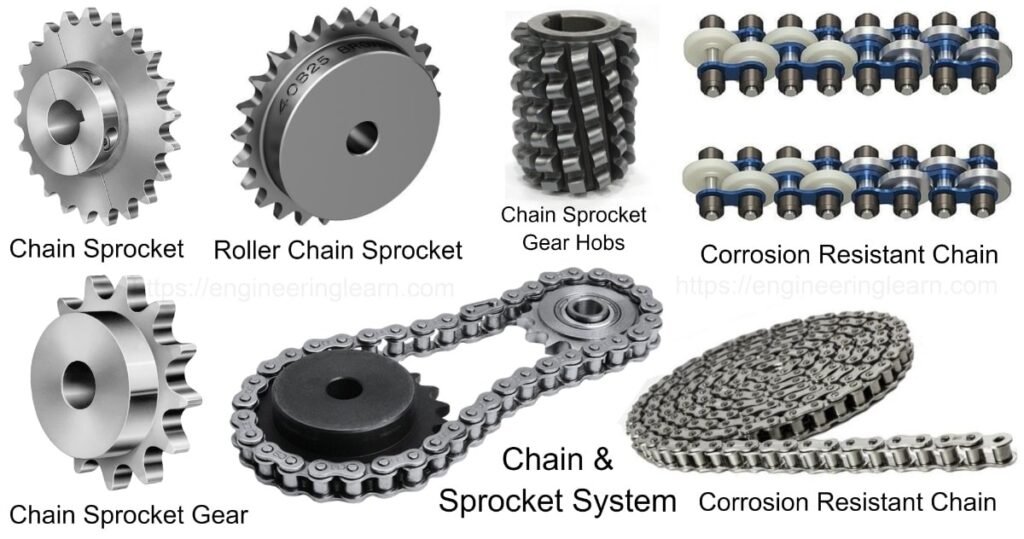
When you look at a motorcycle or a bicycle, your eyes probably go to the shiny paint, the cool wheels, or the powerful engine. It is easy to admire the big, flashy parts. But if you look a little lower, down near the back wheel, you will see a dirty, greasy metal loop. This is the chain, and it runs over sprockets that look like gears with teeth. It might not look like much, but this simple mechanism is the unsung hero of your ride. It is the bridge that transfers all the power from the engine (or your legs) to the rear wheel. Without it, you are not going anywhere. You are just sitting on a heavy piece of metal making noise.
Despite how important they are, chains and sprockets are often the most neglected parts of a bike. We ride in the rain, we ride through dust, and we park our bikes outside, and all that time, the chain is collecting grit and grime. It slowly eats away at the metal, stretching the links and grinding down the teeth of the sprockets. Eventually, a neglected chain will fail. It might snap while you are speeding down the highway, which is incredibly dangerous, or it might just slip off and leave you stranded on the side of the road. But it does not have to be this way. Chain maintenance is one of the easiest skills to learn. It is messy, sure, but it is deeply satisfying. In this guide, we are going to walk through everything you need to know to keep your drivetrain happy, quiet, and safe for thousands of miles.
Why a Healthy Chain Saves You Money and trouble
You might be thinking that chain maintenance is just for mechanics or people who are obsessed with their bikes. But the truth is, taking care of your chain is the single best way to save money on repairs. A chain is a moving part with hundreds of tiny components. It has pins, rollers, and plates that all rub against each other thousands of times a minute. If they are dry and dirty, that friction destroys them.
A well-maintained chain can last for 20,000 miles or more. A neglected chain might die in less than 5,000. When a chain dies, it does not die alone. A stretched, rusty chain acts like a saw blade on your sprockets. It chews off the metal teeth, ruining them. If you let it go too long, you have to replace the front sprocket, the rear sprocket, and the chain all at once. That is a bill for hundreds of dollars. Compare that to the cost of a can of cleaner and a can of lube, which lasts for months.
Beyond the money, there is the ride quality. Have you ever ridden a bike that felt “crunchy” or jerky when you accelerated? That is often a bad chain. A clean, lubed chain feels like butter. The power delivery is smooth, the bike is quieter, and shifting gears feels crisp and precise. It transforms the feeling of the ride. Plus, a clean chain just looks better. A gold or silver chain shining in the sun looks much better than a rusty orange mess.
Understanding the Anatomy of Your Drivetrain
Before we get our hands dirty, let us quickly understand what we are looking at. The system has three main parts. First, there is the front sprocket (sometimes called the countershaft sprocket). This is attached to the engine. It is usually small and hidden behind a plastic cover near your left foot. Then there is the rear sprocket. This is the big metal disc attached to the back wheel. Finally, there is the chain connecting them.
Modern motorcycle chains are marvels of engineering. They are not just metal on metal. Inside the links, there are tiny rubber rings called O-rings (or X-rings). These rubber rings seal factory grease inside the pins and rollers to keep them lubricated forever. This is why you have to be careful what chemicals you use to clean them. If you use a harsh solvent like gasoline, it can eat the rubber rings. Once the seal is broken, the grease leaks out, dirt gets in, and the chain dies very quickly.
The sprockets are simpler. They are just hardened steel (or sometimes aluminum for racing) with teeth. The teeth grab the rollers of the chain to pull it along. When everything is new, the chain rollers fit perfectly into the U-shape between the teeth. As the chain wears out, it gets longer (we call this “stretching,” though the metal does not actually stretch; the holes just get oval-shaped). When the chain gets longer, it rides higher up on the sprocket teeth, slowly wearing them into sharp points. Recognizing these parts helps you understand why cleaning and tension are so critical.
The Art of Cleaning Getting Rid of the Grime
Now, let us get to work. The first step is cleaning. You cannot lubricate a dirty chain. If you spray lube on top of dirt, you just create a grinding paste that destroys the metal faster. You need to strip the old gunk off.
You will need a few things: a dedicated chain cleaner (or kerosene works very well and is cheap), a grunge brush (a three-sided brush made for chains), some cardboard, and plenty of rags. Put your bike on its center stand or a rear paddock stand so the back wheel can spin freely. If you do not have a stand, you will have to roll the bike forward bit by bit, which is annoying but works. Place the cardboard under the chain to catch the drips so you do not stain your driveway.
Spray the cleaner liberally all over the chain. Soak it. Let it sit for a minute to break down the old grease. Then, scrub. Use the brush to scrub the top, bottom, and sides of the chain. You will see black sludge dripping off. This is good. Spin the wheel (always by hand, never use the engine!) and keep scrubbing until you have done the whole loop. Then, rinse it off. You can use a gentle stream of water from a hose, or just more cleaner and rags. Do not use a high-pressure washer. The pressure is too strong and can force water past the rubber O-rings, rusting the chain from the inside out. Wipe it dry with a rag until the chain looks silver (or gold) again. It should look like jewelry.
Lubrication The Secret to a Smooth Ride
Once the chain is clean and dry, it is thirsty. It needs lubrication to protect the metal from rust and to keep the rollers spinning smoothly against the sprockets. You should use a specific motorcycle chain lube. There are two main types: “Wet” lube and “Dry” or “Wax” lube. Wet lube is oily and lasts a long time, but it can fling off and make a mess of your wheel. Dry wax dries to a hard film that does not attract dirt, but it might wash off in heavy rain. Choose the one that fits your riding weather.
The best time to lube your chain is actually after a ride, not before. When you ride, the chain gets warm. When the metal is warm, the lube flows into the tiny gaps better. Also, the solvent in the lube needs time to evaporate so the sticky stuff stays behind. If you lube it and ride immediately, centrifugal force will fling the lube all over your nice clean bike.
To apply it, spin the wheel slowly by hand. Aim the spray nozzle at the inside of the chain run—the part that touches the sprockets. You want to aim right between the inner and outer plates. Do not just spray the outside of the chain; that does nothing because centrifugal force will just throw it off. You want the lube to be pushed into the chain as it spins. Go around the loop twice. Then, grab a clean rag and wipe off the excess. You want the lube inside the links, not dripping off the outside. A thin film is all you need.
Finding the Sweet Spot Adjusting Chain Tension
A chain needs to be tight enough to stay on, but loose enough to move. This is the Goldilocks zone. If a chain is too loose, it flops around. It can slap against the swingarm, making a clanking noise. In the worst case, it can jump off the sprocket and lock up the rear wheel, causing a crash. If a chain is too tight, it acts like a guitar string under tension. It puts massive stress on the engine bearings and the suspension. It can snap under heavy load or ruin the gearbox output shaft seal.
To check the tension, look at the bottom run of the chain, halfway between the front and rear sprockets. Push it up and pull it down. Measure how much it moves. Your owner’s manual will have a specific number, usually around 20 to 30 millimeters (about an inch). This is called “slack.”
Why do we need slack? Because your bike has rear suspension. When you hit a bump, the rear wheel moves up. As the swingarm moves up, the distance between the engine and the rear axle actually gets longer. If the chain is bar-tight, the suspension cannot move. The chain binds the suspension, making the ride harsh and risking breakage. To adjust it, you usually loosen the rear axle nut and turn the adjuster bolts at the end of the swingarm. Turn them equally on both sides (quarter turn at a time) to keep the wheel straight. Check the tension again, and tighten the axle nut to the correct torque. Always check the tension at the “tightest spot” of the chain by rotating the wheel, as chains often wear unevenly.
Inspecting for Danger Signs of Wear and Tear
While you are down there cleaning, you should be playing detective. You are looking for signs that the chain or sprockets are dying. The first thing to look at is the teeth on the rear sprocket.
On a new sprocket, the teeth are symmetrical and flat on top. As they wear, they start to curve. They begin to look like a breaking wave or a shark’s fin. If the teeth are hooked and sharp, the sprocket is trash. It will destroy any new chain you put on it.
Next, check the chain itself. Pull the chain straight back from the very rear of the rear sprocket (at the 3 o’clock position). If you can pull the chain away from the sprocket enough to see half of a tooth, the chain is stretched out. It is worn internally and needs to be replaced. Also, look for “kinks” or stiff links. Sometimes a link gets rusted or stuck and does not straighten out. It stays bent in a V-shape even when it is on the straight run. You can sometimes fix this with cleaning and lube, but if it stays stiff, it creates a weak point that causes vibration and eventually failure. Finally, look for rust. Surface rust on the outside plates is ugly but usually okay. But if you see red dust (called “rouge”) coming out from inside the rollers, that means the internal grease is gone and the metal is grinding itself to death. That chain is a ticking time bomb.
The Golden Rule Always Replace as a Set
One of the most common questions people ask is, “Can I just change the chain and keep my old sprockets?” The answer is almost always no. It is physically possible, but it is a false economy.
Think of the chain and sprockets like a married couple. They grow old together. As the chain stretches, it wears the sprocket teeth in a specific pattern to match its new length. They wear into each other. If you take a brand new chain (which has a perfect, tight pitch) and put it on an old, worn sprocket (which has a wider pitch), they will not fit. The new chain will ride up on the worn teeth.
This mismatch causes massive stress on the new chain. A brand new chain on old sprockets might wear out in 2,000 miles instead of 20,000. You are throwing money away. Conversely, putting an old chain on a new sprocket will ruin the new sprocket in days. The only exception is if you have barely ridden the bike (maybe 500 miles) and want to change the gearing ratio. But for general maintenance, always buy a kit. A chain and sprocket kit usually costs around $150 to $200. It is a small price to pay for safety and longevity.
Riding Habits That Kill Your Drivetrain
Maintenance is not just about what you do in the garage; it is also about how you ride. Your right hand has a huge impact on how long your chain lasts. Smooth riding extends the life of every part of the bike.
Aggressive acceleration and wheelies are the biggest chain killers. When you dump the clutch or whack the throttle open, you send a shockwave of force through the chain. This stretches the side plates instantly. Engine braking also stresses the chain, pulling it from the bottom run instead of the top. While this is normal, doing it violently (dropping two gears and dumping the clutch) puts unnecessary strain on the system.
Neglect after rain is another killer. Water is the enemy. If you ride in the rain, the water acts as a lubricant for a while, but it also carries road grit and salt deep into the chain. More importantly, when the water dries, the chain starts to rust immediately. If you get home from a wet ride, take two minutes to spray some lube on the chain before you go inside. It displaces the water and prevents that orange rust from forming overnight. Similarly, if you ride on dirt or gravel roads, dust sticks to the lube and turns into grinding paste. You will need to clean your chain much more often than a street rider—maybe every 300 miles instead of every 600.
Conclusion Give Your Bike the Love It Deserves
Taking care of your chain and sprockets is not the most glamorous part of owning a bike. It is messy, your hands get black, and you have to kneel on the concrete. But it is a ritual that connects you to your machine. It forces you to look closely at the mechanical parts that keep you safe.
A well-maintained drivetrain is quiet, efficient, and reliable. It gives you peace of mind when you are miles away from home. You know that the vital link between your engine and the road is strong. You won’t be that rider stuck on the shoulder waiting for a tow truck because a $100 part failed.